
For more than 30 years, Webolutions has helped businesses in Denver and across the country engineer digital marketing strategies that drive measurable growth. From our Denver office at Fiddler’s Green, we partner with organizations ranging from emerging local companies to established enterprise brands, combining strategic leadership, advanced digital marketing expertise, and deep knowledge of the Denver business landscape. Our team understands what it takes to compete in one of the nation’s fastest-growing and most competitive markets—from increasing search visibility and generating qualified leads to improving conversion performance and long-term brand authority. Every strategy we develop is built to align marketing, messaging, technology, and user experience into a cohesive system designed to produce sustainable business results.
Denver Digital Marketing Agency
#1 Digital Marketing Agency in Denver

Denver Digital Marketing Services

Denver Web Design Services
Your website should do far more than look impressive — it should function as a strategic business asset engineered to attract, engage, and convert the right audience. With more than three decades of experience designing high-performing websites, Webolutions web design and digital marketing creates custom web experiences that align strategy, branding, user experience, SEO, and conversion optimization into a unified digital platform. Our Denver web design team understands the competitive dynamics of the local market and develops websites that are built not only for visual impact, but for long-term business performance. From locally focused companies to national organizations with a Denver presence, we design scalable, responsive websites that strengthen brand credibility, improve user engagement, and support measurable growth objectives.

Denver Branding Services
In a competitive market like Denver, effective branding is not simply about logos, colors, or taglines — it is about creating a clear market position that builds trust, differentiates your business, and drives long-term customer loyalty. For more than 30 years, Webolutions web design and digital marketing has helped organizations develop strategic brand identities that align business vision, messaging, audience psychology, and digital experience into a cohesive brand system. Our team understands the evolving dynamics of the Denver market, from the innovation-driven business culture of the Denver Tech Center to the rapidly expanding entrepreneurial landscape across the region. Whether launching a new company or repositioning an established organization, we create branding strategies designed to strengthen market authority, communicate value with clarity, and build meaningful connections with the audiences most important to your growth.

Denver SEO Services
Achieving sustainable visibility in Denver’s increasingly competitive digital landscape requires far more than basic keyword optimization. Effective SEO demands a strategic understanding of search behavior, technical performance, content authority, user intent, and the evolving algorithms that influence how businesses are discovered online. With more than three decades of digital marketing experience, Webolutions web design and digital marketing develops comprehensive SEO strategies engineered to improve search visibility, increase qualified traffic, and generate measurable business growth. Our team combines advanced technical SEO, content strategy, local SEO optimization, and conversion-focused insights to help businesses strengthen their presence across Denver and the surrounding market. From optimizing website architecture and on-page relevance to building local authority signals and improving Google Business Profile performance, our SEO strategies are designed to help organizations earn greater visibility, attract higher-quality leads, and compete more effectively in the Mile High City.

Denver Paid Ads Services
Webolutions Voted Top Denver Advertising Agency by the Denver Business Journal – May 2026
Webolutions develops strategic paid advertising campaigns for Denver businesses seeking stronger lead generation, improved campaign efficiency and measurable business growth. Our team creates integrated paid media strategies that align audience targeting, messaging, landing pages and conversion optimization to improve overall campaign performance.
As a Denver paid advertising agency, Webolutions manages Google Ads, paid social media campaigns, remarketing and other digital advertising strategies designed to increase visibility, improve lead quality and support scalable growth. By integrating paid advertising with SEO, branding, website performance and conversion strategy, we help Denver businesses build marketing systems engineered for measurable ROI and long-term success.

Denver Content Marketing Services
Webolutions develops strategic content marketing systems designed to help Denver businesses improve search visibility, strengthen topical authority and engage prospective customers more effectively. Our team creates content strategies aligned with SEO, AI search optimization, branding and conversion goals to support long-term digital growth.
From website content and thought leadership articles to blog strategy, email campaigns and conversion-focused messaging, Webolutions helps Denver businesses create content ecosystems designed to improve visibility, build trust and support measurable business performance across evolving digital search environments.

Denver Web Development
Denver businesses need websites that are as dynamic and innovative as the city itself. At Webolutions, our web development services are designed to build powerful, scalable websites that meet the needs of businesses in the Denver area. We utilize the latest technologies and development practices to create sites that are fast, secure, and easy to manage. Whether you’re looking to develop an eCommerce platform, a corporate website, or a custom web application, our team at Fiddler’s Green is here to bring your vision to life and support your business growth.
Webolutions Digital Marketing Agency in Denver, Colorado
Webolutions is a full-spectrum digital marketing agency and strategic growth implementation company born right here in Denver in 1994. We help businesses and organizations across the country effectively bring their unique story to life, empowering them to scale faster, smarter, and easier.

Performance Intelligence
Webolutions leverages data analytics to provide a more accurate picture of your company’s performance, allowing you to identify areas of inefficiency, optimize marketing campaigns, and improve customer engagement.

Proven Results
Webolutions utilizes our past successes with measurable outcomes including increasing website traffic, higher conversion rates, improved search engine rankings, and increased revenue and ROI for our clients.
True Leadership
Webolutions is a marketing agency that guides and supports our clients with innovative strategies that empower their businesses to thrive, while still sitting on the same side of the table as our clients.
Providing Comprehensive Digital Marketing Services Nationwide from Our Offices in Denver, Colorado
Webolutions is a digital marketing agency based in Denver, Colorado. With a purpose To Empower Passionate People to Thrive, we offer a diverse array of solutions to help businesses stay on the forefront of the ever-evolving digital marketing landscape. Our comprehensive digital marketing services include:
Content Marketing
Content marketing involves creating and distributing valuable, relevant content to attract and engage a target audience, fostering brand loyalty, and ultimately driving business growth.
Customer Journey
Customer Journey Mapping is your blueprint to understanding the customer experience. By visualizing the customer's path from initial awareness to post-purchase, we identify key interactions and emotional states. This process highlights opportunities for engagement, pain points that need smoothing over, and moments that can turn satisfied customers into brand ambassadors.
eCommerce Marketing
Ecommerce marketing is the set of strategies and tactics used to promote and sell products or services through online stores. It involves techniques such as email marketing, social media advertising, search engine optimization, and more to attract and engage customers, drive sales, and enhance the online shopping experience for businesses operating in the digital marketplace.
Marketing Strategy
Exceptional marketing begins with a clear strategy. Before recommending tactics, Webolutions works to understand your business goals, competitive landscape, customers, and growth opportunities. Our strategic planning process aligns branding, web design, digital marketing, sales objectives, and performance measurement into a unified roadmap that helps organizations make smarter marketing investments and achieve sustainable, long-term success.
Paid Ads
Successful paid advertising is about much more than generating clicks—it’s about generating profitable business growth. Webolutions develops data-driven Google Ads, Microsoft Ads, Local Services Ads, display advertising, remarketing, and social advertising campaigns that attract qualified prospects while maximizing return on investment. Through continuous optimization, conversion tracking, and our Performance Intelligence™ reporting, we help clients reduce acquisition costs, improve lead quality, and scale revenue with confidence.
SEO
Webolutions delivers comprehensive SEO strategies designed to increase qualified organic traffic, strengthen online authority, and generate long-term business growth. Our integrated approach combines technical SEO, content strategy, competitive analysis, authority building, local SEO, and AI search optimization to improve visibility across both traditional search engines and emerging AI-powered search experiences. Every recommendation is driven by data and focused on measurable business results—not simply rankings.
Social Media Marketing
Social media marketing is the practice of utilizing various social media platforms, such as Facebook, Instagram, and Twitter, to connect with target audiences, build brand awareness, and promote products or services. It involves creating engaging content, running paid advertisements, and fostering interaction with followers to achieve business objectives, making it an essential strategy for businesses looking to expand their online presence and connect with their audience.
eCommerce
Embark on a transformative digital journey with Webolutions, where your e-commerce aspirations take center stage in a symphony of innovation and creativity. In the vast landscape of web design and development, we redefine the ordinary, curating not just e-commerce websites but immersive digital experiences.
Web Design
Web design is the art of creating the visual elements and layout of a website. It involves the use of various design principles, typography, graphics, and user interface techniques to craft an appealing and user-friendly digital presence for businesses, enhancing their online image and customer engagement.
Web Development
Web development is the process of building and maintaining websites or web applications. It encompasses various technical tasks, including coding, programming, database management, and server configuration, to ensure a website functions correctly and delivers a seamless user experience.

Testimonials
What our clients are saying
Your amazing team knew exactly the right steps to take us to the next level. You really nailed it.

Testimonials
What our clients are saying
The website turned out exactly as we envisioned it. Webolutions did everything we asked. Project management communications were prompt, proactive, and meaningful.

Testimonials
What our clients are saying
Their ability to develop a functional yet stylish website that can also generate traffic and conversions is uncommon and sets them apart.

Testimonials
What our clients are saying
We’re a long-established nonprofit but this was our first major web development effort. We needed a partner to guide us through the process and help us learn as we go. Guidance was comprehensive, communication was timely, and our dispersed and diverse staff gained comfort with Webolutions every step of the way. For anyone seeking this experience, we recommend Webolutions 100%.

Testimonials
What our clients are saying
I wasn’t just thinking I was just buying a website. I was looking for something that could disrupt the industry. That’s exactly what Webolutions delivered.
Get Your Free Proposal
Connect with a Webolutions digital marketing expert right here in Denver.




Just Some of the Many Companies and Organizations that Trust their Digital Marketing to Webolutions





Digital Marketing FAQs
What Is the Average Digital Marketing Budget for a Business?
It’s impossible to provide you with an accurate estimate for digital marketing services without performing a deep dive into the nature of your business and your overall goals. However, there are certain industry averages you can reference to determine whether your ideal budget is going to be appropriate to achieve your goals.
In general, most businesses allocate 10%-20% of their revenue to their marketing budget. Whether you are on the high or low end of this range will depend on your industry, the size of your business, and your growth goals. While some of this marketing budget can go towards traditional strategies, it’s critical to allocate the vast majority of it to digital marketing, as this is where you’re likely to experience the greatest ROI on your efforts and maximize your lead generation results.
Our team is happy to discuss more concrete figures regarding an appropriate digital marketing budget for your business during a free consultation. Give us a call or contact us to find out how we can help your business become more successful.
Next Digital Marketing FAQ: What’s The Difference Between Online Marketing, Internet Marketing, and Digital Marketing?
How does mobile optimization impact SEO rankings?
Mobile optimization is crucial for SEO rankings as search engines consider mobile-friendliness as a ranking factor. Having a mobile-responsive website design ensures that your site is accessible and provides a positive user experience across different devices.
What is an SEO Audit?
An SEO audit is a process of evaluating a website’s SEO performance and identifying areas for improvement.
Continue your research and learn more with other FAQs About SEO.
If you’d like, learn more about SEO services and the different types of SEO.
If you’re done learning about SEO and are ready for help, please Contact Us.
What is a 301 Redirect?
A 301 redirect is a permanent redirect from one URL to another.
Continue your research and learn more with other FAQs About SEO.
If you’d like, learn more about SEO services and the different types of SEO.
If you’re done learning about SEO and are ready for help, please Contact Us.
What are the common SEO pitfalls to avoid?
Common SEO pitfalls to avoid include keyword stuffing, duplicate content, poor user experience, slow page load times, ignoring analytics and data, and neglecting mobile optimization.
Continue your research and learn more with other FAQs About SEO.
If you’d like, learn more about SEO services and the different types of SEO.
If you’re done learning about SEO and are ready for help, please Contact Us.
How can organizations measure the success of their content marketing efforts?
Success in content marketing is measured through key performance indicators (KPIs) such as website traffic, engagement metrics, lead generation, conversion rates, and customer retention. Regular analysis of these metrics helps refine content strategies.
Next Content Marketing FAQ: How can organizations repurpose content for maximum impact?
What is a robots.txt File?
A robots.txt file is a file that tells search engines which pages or sections of a website should not be crawled or indexed.
Continue your research and learn more with other FAQs About SEO.
If you’d like, learn more about SEO services and the different types of SEO.
If you’re done learning about SEO and are ready for help, please Contact Us.
How can e-commerce businesses leverage influencer marketing?
Influencer marketing involves partnering with individuals who have a significant online following to promote products. E-commerce businesses can collaborate with influencers relevant to their niche to reach new audiences and build credibility.
Next eCommerce Marketing FAQ: How does remarketing work in e-commerce marketing?
What is a nofollow Link?
A nofollow link is a link that does not pass link equity from one website to another.
Continue your research and learn more with other FAQs About SEO.
If you’d like, learn more about SEO services and the different types of SEO.
If you’re done learning about SEO and are ready for help, please Contact Us.
How can businesses create a sense of urgency in e-commerce marketing?
Creating urgency encourages immediate action. E-commerce businesses can use limited-time offers, flash sales, countdown timers, and low-stock alerts to motivate customers to make quicker purchasing decisions.
Next eCommerce Marketing FAQ: How can businesses optimize their product listings for better visibility in e-commerce?
How can I track the success of my SEO efforts?
You can track the success of your SEO efforts by monitoring key metrics such as organic traffic, keyword rankings, conversion rates, bounce rates, and backlink profiles. Tools like Google Analytics and Google Search Console can provide valuable insights.
Continue your research and learn more with other FAQs About SEO.
If you’d like, learn more about SEO services and the different types of SEO.
If you’re done learning about SEO and are ready for help, please Contact Us.
How is Keyword Density Calculated?
Keyword density is the percentage of times a keyword or phrase appears on a web page compared to the total number of words on the page.
Continue your research and learn more with other FAQs About SEO.
If you’d like, learn more about SEO services and the different types of SEO.
If you’re done learning about SEO and are ready for help, please Contact Us.
What role does social media play in e-commerce marketing?
Social media is a powerful tool for e-commerce marketing, allowing businesses to engage with customers, showcase products, and drive traffic to their online stores. Platforms like Instagram and Facebook provide opportunities for visual storytelling and targeted advertising.
Next eCommerce Marketing FAQ: How can businesses create a sense of urgency in e-commerce marketing?
What is a Conversion Rate?
A conversion rate is the percentage of visitors who take a desired action on a website, such as making a purchase or filling out a form.
Continue your research and learn more with other FAQs About SEO.
If you’d like, learn more about SEO services and the different types of SEO.
If you’re done learning about SEO and are ready for help, please Contact Us.
How can I optimize my landing pages for better conversion rates?
To optimize landing pages for better conversion rates, you can use the following strategies: match the landing page content and design to the ad, make the page load quickly, ensure a clear and prominent CTA, remove distractions, provide social proof, use persuasive copywriting techniques, and conduct A/B testing to identify what works best for your audience.
What is Google Search Console?
Google Search Console is a free tool that allows website owners to monitor and maintain their website’s presence in Google search results.
Read our article: A Beginners Guide to Google Search Console – Key Features, Benefits, and Functionalities
Continue your research and learn more with other FAQs About SEO.
If you’d like, learn more about SEO services and the different types of SEO.
If you’re done learning about SEO and are ready for help, please Contact Us.
What are Some On-Page SEO Factors?
On-page SEO factors include title tags, meta descriptions, header tags, URL structure, keyword optimization, and content quality.
Continue your research and learn more with other FAQs About SEO.
If you’d like, learn more about SEO services and the different types of SEO.
If you’re done learning about SEO and are ready for help, please Contact Us.
Next FAQ: What are Long Tail Keywords and Why are They Important for SEO?
What is a Title Tag and Why is it Important?
A title tag is an HTML element that specifies the title of a webpage.
Title tags are important for SEO because they are one of the first things that search engines and users see when they come across your website.
Continue your research and learn more with other FAQs About SEO.
If you’d like, learn more about SEO services and the different types of SEO.
If you’re done learning about SEO and are ready for help, please Contact Us.
What is a Content Strategy?
A content strategy is a plan for creating and publishing content that supports your business goals and SEO objectives.
Read our article: 5 Ways to Make Your Website Content Drive ROI
Continue your research and learn more with other FAQs About SEO.
If you’d like, learn more about SEO services and the different types of SEO.
If you’re done learning about SEO and are ready for help, please Contact Us.
How do you Optimize Images for SEO?
You can optimize images for SEO by using descriptive filenames, adding alt text, compressing the file size, and using relevant captions.
Next FAQ: How Do I Know If My Web Designer Knows What They’re Talking About?
What is Link Building?
Link building is the process of acquiring backlinks to a website. Link building is an important aspect of search engine optimization (SEO) because search engines like Google consider backlinks as a measure of a website’s authority and popularity.
Read our article: Backlinks and SEO Why They Matter and How They Impact Search Engine Rankings
Continue your research and learn more with other FAQs About SEO.
If you’d like, learn more about SEO services and the different types of SEO.
If you’re done learning about SEO and are ready for help, please Contact Us.
What is a Social Media Strategy?
A social media strategy is a plan for using social media platforms to support your business goals and SEO objectives.
Continue your research and learn more with other FAQs About SEO.
If you’d like, learn more about SEO services and the different types of SEO.
If you’re done learning about SEO and are ready for help, please Contact Us.
What is a Local Citation?
A local citation is a mention of a business on another website, such as a directory or review site.
Continue your research and learn more with other FAQs About SEO.
If you’d like, learn more about SEO services and the different types of SEO.
If you’re done learning about SEO and are ready for help, please Contact Us.
What is SEO?
SEO is short for search engine optimization, a form of website optimization to help websites rank well within search engines. The purpose of SEO is to increase a website’s online visibility to achieve various goals such as greater brand recognition, increased website traffic and more sales.
Learn more about: SEO and the different types of SEO services.
What is PPC?
PPC advertising, also known as pay-per-click advertising, is a model where advertisers pay a fee whenever their ad is clicked. It involves creating targeted ads and placing them on search engine result pages or relevant websites.
Which platforms offer PPC advertising?
PPC advertising is offered on various platforms, including Google Ads (formerly Google AdWords), Bing Ads, Facebook Ads, Twitter Ads, LinkedIn Ads, and many more.
What are the best strategies for writing effective ad copy?
To write effective ad copy, it’s essential to understand your target audience, highlight the unique selling points of your product or service, use compelling language, include a clear call-to-action (CTA), and continuously test and refine your ads based on performance.
What role does storytelling play in content marketing?
Storytelling humanizes brands and resonates with audiences. It creates an emotional connection, making content memorable and shareable. Effective storytelling can enhance brand identity and increase engagement.
Next Content Marketing FAQ: What types of content are effective for content marketing?
What is a Sitemap and Why is it Important for SEO?
A sitemap is a file that lists all the pages on a website and provides information about each page.
Continue your research and learn more with other FAQs About SEO.
If you’d like, learn more about SEO services and the different types of SEO.
If you’re done learning about SEO and are ready for help, please Contact Us.
What is e-commerce marketing?
E-commerce marketing refers to the strategies and tactics employed to promote and sell products or services online. It encompasses various digital marketing channels, including social media, search engines, email, and other online platforms.
Next eCommerce Marketing FAQ: What is the role of mobile optimization in e-commerce marketing?
How can e-commerce businesses effectively use email marketing?
Email marketing for e-commerce includes personalized product recommendations, promotional offers, and abandoned cart reminders. Building segmented email lists, crafting compelling subject lines, and analyzing customer behavior contribute to effective email campaigns.
Next eCommerce Marketing FAQ: How can e-commerce businesses leverage influencer marketing?
What is the role of mobile optimization in e-commerce marketing?
With the increasing use of mobile devices for online shopping, mobile optimization is crucial. E-commerce sites should have responsive design, fast loading times, and user-friendly navigation to provide a seamless experience for mobile users.
Next eCommerce Marketing FAQ: What is the significance of customer reviews in e-commerce marketing?
FAQ: Why Is Duplicate Content Bad for SEO? (2025 Update)
Duplicate content refers to substantial blocks of identical or nearly identical content that appear across different URLs or domains. It can be found internally on your site or externally across the web. Source: https://www.seo.com/basics/glossary/duplicate-content/
Why Duplicate Content Hurts SEO
- Confuses Search Engines
When search engines encounter multiple versions of the same content, they must choose which one to index and rank—often resulting in lower visibility or the wrong page showing up in search. Source: https://searchengineland.com/guide/duplicate-content-fixes
- Dilutes Link Equity & Ranking Power
Links and authority are split across versions, reducing the overall SEO value any single page receives. Maintaining a unique version maximizes impact. Source: https://www.searchenginejournal.com/technical-seo/duplicate-content-issues/
- Wastes Crawl Budget
Duplicate pages consume time and resources during crawling, potentially preventing search engines from indexing new, high-value content. Source: https://www.seo.com/basics/glossary/duplicate-content/
- Degrades User Experience
Users may feel confused or frustrated if they’re directed to repetitive content, reducing trust and engagement. Source: https://www.similarweb.com/blog/marketing/seo/duplicate-content/
How Search Engines Handle Duplicate Content
- No Blanket Penalty – Google typically filters duplicates rather than issuing penalties—unless the duplication is malicious. Sources: https://ahrefs.com/blog/duplicate-content/, https://www.seo.com/basics/glossary/duplicate-content/
- Canonical Tags as Signals – Adding a <link rel=”canonical”> tag helps search engines understand which version is preferred. Source: https://en.wikipedia.org/wiki/Canonical_link_element
Common Causes & Smart Fixes
- URL variations (session IDs, parameters) → Use canonical tags or redirect variants to the main URL
- HTTP/HTTPS or www vs non-www duplicates → Implement redirects and enforce a single preferred domain
- Copied or syndicated content → Use canonical tags or request proper attribution
- Similar internal pages (e.g. printer-friendly, tag pages) → Apply noindex to low-value pages to avoid duplication
Why Addressing Duplicate Content Matters
Resolving duplication isn’t just an ‘SEO cleanup task’—it’s a performance driver. Cleaning up duplicate content can lead to significant ranking improvements and restore link equity to the correct URLs. Source: https://searchengineland.com/guide/duplicate-content-fixes
Further Reading & Resources
Ahrefs Guide: Duplicate Content – What It Is & How to Fix It – https://ahrefs.com/blog/duplicate-content/
Search Engine Journal: Solving Duplicate Content Issues – https://www.searchenginejournal.com/technical-seo/duplicate-content-issues/
Search Engine Land: Duplicate Content Explained (2025) – https://searchengineland.com/guide/duplicate-content-fixes
Wikipedia: Canonical Link Element – https://en.wikipedia.org/wiki/Canonical_link_element
What Is the Average Digital Marketing Budget for a Business?
It’s impossible to provide you with an accurate estimate for digital marketing services without performing a deep dive into the nature of your business and your overall goals. However, there are certain industry averages you can reference to determine whether your ideal budget is going to be appropriate to achieve your goals.
In general, most businesses allocate 10%-20% of their revenue to their marketing budget. Whether you are on the high or low end of this range will depend on your industry, the size of your business, and your growth goals. While some of this marketing budget can go towards traditional strategies, it’s critical to allocate the vast majority of it to digital marketing, as this is where you’re likely to experience the greatest ROI on your efforts and maximize your lead generation results.
Our team is happy to discuss more concrete figures regarding an appropriate digital marketing budget for your business during a free consultation. Give us a call or contact us to find out how we can help your business become more successful.
Next Digital Marketing FAQ: What’s The Difference Between Online Marketing, Internet Marketing, and Digital Marketing?
What is the role of audience personas in content marketing?
Audience personas are fictional representations of target audience segments. They guide content creation by providing insights into the needs, preferences, and behaviors of specific audience groups. Tailoring content to these personas increases its relevance and effectiveness.
Next Content Marketing FAQ: What role does storytelling play in content marketing?
Why is SEO Important?
Optimizing your website for search engines allows it to rank higher in search engine result pages (SERPs), which can lead to increased visibility and traffic to your website. Higher rankings on search engine result pages can also increase brand credibility and improve the user experience for your website visitors. Additionally, SEO can help you identify new keywords and phrases that your potential customers may be using to search for products or services. This information is critical for developing targeted marketing campaigns and creating relevant content that resonates with your target audience.
Continue your research and learn more with other FAQs About SEO.
If you’d like, learn more about SEO services and the different types of SEO.
If you’re done learning about SEO and are ready for help, please Contact Us.
What is the difference between on-page and off-page SEO?
On-page SEO refers to optimizing elements on your webpage itself, such as content, meta tags, and URL structure. Off-page SEO, on the other hand, involves activities outside your website, such as link building and social media marketing.
What is a dofollow Link?
A dofollow link is a link that passes link equity from one website to another.
Continue your research and learn more with other FAQs About SEO.
If you’d like, learn more about SEO services and the different types of SEO.
If you’re done learning about SEO and are ready for help, please Contact Us.
What are the best practices for optimizing website content?
Some best practices for optimizing website content include conducting keyword research, creating high-quality and relevant content, optimizing title tags and meta descriptions, using headers and subheadings, incorporating internal and external links, and ensuring a user-friendly and engaging experience.
Continue your research and learn more with other FAQs About SEO.
If you’d like, learn more about SEO services and the different types of SEO.
If you’re done learning about SEO and are ready for help, please Contact Us.
What is an SEO Audit?
An SEO audit is a process of evaluating a website’s SEO performance and identifying areas for improvement.
Continue your research and learn more with other FAQs About SEO.
If you’d like, learn more about SEO services and the different types of SEO.
If you’re done learning about SEO and are ready for help, please Contact Us.
How does content marketing contribute to the customer journey?
Content marketing plays a crucial role throughout the customer journey, from awareness to conversion and retention. It provides valuable information, addresses customer needs, builds trust, and helps guide prospects through the decision-making process.
Next Content Marketing FAQ: How does SEO relate to content marketing?
What is Google My Business?
Google My Business (now Google Business Profile) is a free tool that allows businesses to manage their online presence across Google, including search and maps.
Continue your research and learn more with other FAQs About SEO.
If you’d like, learn more about SEO services and the different types of SEO.
If you’re done learning about SEO and are ready for help, please Contact Us.
What are display ads and how do they differ from search ads?
Display ads are visual advertisements that appear on websites, apps, or social media platforms. They can be in the form of images, videos, or rich media. Search ads, on the other hand, appear in search engine results when users search for specific keywords. The main difference is that display ads are shown to users while they are browsing websites, while search ads are shown in response to specific search queries.
Learn more about Webolution’s Paid Advertising Solutions.
What is a Goal in Google Analytics?
A goal in Google Analytics is a specific action that you want visitors to take on your website, such as completing a purchase or filling out a form.
Continue your research and learn more with other FAQs About SEO.
If you’d like, learn more about SEO services and the different types of SEO.
If you’re done learning about SEO and are ready for help, please Contact Us.
How can businesses optimize their product listings for better visibility in e-commerce?
Optimizing product listings involves using high-quality images, detailed product descriptions, relevant keywords, and customer reviews. Implementing SEO best practices and leveraging product attributes enhance visibility in search results.
Next eCommerce Marketing FAQ: How can e-commerce businesses effectively use email marketing?
What is Duplicate Content?
Duplicate content is content that appears on more than one webpage.
Continue your research and learn more with other FAQs About SEO.
If you’d like, learn more about SEO services and the different types of SEO.
If you’re done learning about SEO and are ready for help, please Contact Us.
How does SEO relate to content marketing?
SEO (Search Engine Optimization) is closely tied to content marketing. Creating high-quality, relevant content improves a website’s search engine ranking, making it more discoverable by users. A strategic use of keywords, meta tags, and quality backlinks enhances SEO efforts.
Next Content Marketing FAQ: What is content marketing?
How Is Online Marketing Different than Internet Marketing?
Online marketing and internet marketing are often used interchangeably, as both terms refer to marketing activities conducted on the internet. However, there can be a distinction between the two based on the focus and scope of their coverage. Here’s a breakdown of how online marketing differs from internet marketing:
Online Marketing: Online marketing specifically refers to marketing activities conducted online, leveraging the internet and its associated channels to reach and engage potential customers. It focuses on promoting products, services, or brands through various digital means. Online marketing encompasses strategies such as search engine marketing (SEM), social media marketing (SMM), email marketing, content marketing, display advertising, and other forms of marketing that primarily take place on the internet. Online marketing typically involves using websites, online platforms, and digital media channels to target and connect with the intended audience.
Internet Marketing: Internet marketing has a broader scope and encompasses all marketing activities conducted over the internet. While online marketing is a subset of internet marketing, the latter includes online marketing tactics as well as other forms of marketing that occur on the internet, but may not necessarily be digital. This includes activities such as online directory listings, online public relations, online advertising, online partnerships, and other non-digital forms of marketing that occur on the internet.
In summary, online marketing is more focused on the digital marketing tactics and strategies employed specifically on the internet. It revolves around leveraging online channels and platforms to promote products or services. On the other hand, internet marketing encompasses a wider range of marketing activities, including both digital and non-digital forms of marketing, as long as they are conducted on the internet. The term “internet marketing” acknowledges the use of the internet as a medium for marketing efforts, regardless of whether they are strictly digital or not.
How does mobile optimization impact SEO rankings?
Mobile optimization is crucial for SEO rankings as search engines consider mobile-friendliness as a ranking factor. Having a mobile-responsive website design ensures that your site is accessible and provides a positive user experience across different devices.
What is Guest Blogging?
Guest blogging is the practice of writing content for another website in exchange for a backlink to your own website.
Continue your research and learn more with other FAQs About SEO.
If you’d like, learn more about SEO services and the different types of SEO.
If you’re done learning about SEO and are ready for help, please Contact Us.
How Is Digital Marketing Different from Online Marketing?
Digital Marketing vs Online Marketing
Digital marketing and online marketing are similar in that they both involve marketing efforts conducted through digital channels. However, there are distinctions between the two terms based on the breadth of their coverage. Here’s how digital marketing differs from online marketing:
Digital Marketing:
Digital marketing is a broad term that encompasses all marketing activities that utilize digital channels and electronic devices, regardless of whether they are online or offline. It recognizes the use of digital technologies and platforms for marketing purposes. Digital marketing includes various online marketing tactics, such as search engine marketing (SEM), social media marketing (SMM), email marketing, content marketing, display advertising, and more. Additionally, it extends to offline digital marketing channels like mobile marketing (e.g., SMS marketing), digital billboards, digital signage, digital television, and other forms of digital advertising and promotion.
Digital marketing encompasses a holistic approach, considering all digital touchpoints and customer interactions across multiple platforms and devices. It aims to reach and engage customers through various digital means, both online and offline.
Online Marketing:
Online marketing, on the other hand, specifically refers to marketing activities conducted online or on the internet. It focuses primarily on utilizing online channels and platforms to promote products, services, or brands. Online marketing strategies include search engine marketing (SEM), social media marketing (SMM), email marketing, content marketing, display advertising, and other forms of marketing that predominantly take place on the internet.
Online marketing emphasizes leveraging websites, online platforms, and digital media channels to connect with the target audience and drive engagement, conversions, and brand awareness.
In summary, digital marketing is a broader term that encompasses all marketing activities using digital channels and devices, including online and offline tactics. It takes into account the entire digital ecosystem. On the other hand, online marketing is a subset of digital marketing that focuses specifically on marketing efforts conducted online, utilizing online channels and platforms to reach and engage potential customers.
Next Digital Marketing FAQ: How Is Internet Marketing Different Than Digital Marketing?
SEO FAQs: How Do You Optimize Images for SEO?
What is a Competitive Analysis?
A competitive analysis is an evaluation of your competitors’ SEO performance and strategies in order to identify opportunities for improvement.
Continue your research and learn more with other FAQs About SEO.
If you’d like, learn more about SEO services and the different types of SEO.
If you’re done learning about SEO and are ready for help, please Contact Us.
What Are Best Practices for Digital Marketing?
The following best practices should be followed when establishing a digital marketing strategy:
- Define your goals – In order to develop an effective strategy, you must first define your goals. Focus on just a few goals that are most critical to moving your company forward. These goals should drive all of your digital marketing efforts.
- Identify your target audience – Your target audience will play a major role in the specific digital marketing strategies and channels you utilize. In order to maximize your ROI, your marketing efforts need to be directed to the platforms where your audience spends the most time, and your content must address their specific needs.
- Establish a budget for each digital channel in your strategy – While some digital marketing channels such as SEO, email marketing and content marketing only require an expenditure of time to create and optimize the assets, other channels such as PPC and paid social ads will require you to set a budget for each campaign. It’s important to be strategic about these budgets, allocating the most dollars to the channels and campaigns that will deliver the best ROI.
- Determine the right balance between free and paid digital marketing strategies – The most effective digital marketing strategies utilize a mix of free and paid elements. Organic SEO results often take longer to achieve and email contact lists can take a while to build, making the free channels more of a long term strategy. To achieve results in the short term, you’ll often need to supplement these efforts with paid ads. The right balance of these strategies will be determined by the goals you established.
- Conduct keyword research – In order for your digital marketing efforts to be effective, your audience must be able to find your website and all relevant content that can address their needs. Conducting keyword research is critical to your ability to ensure these efforts target the subjects and searches that are most important to your audience.
- Create engaging content – The phrase “content is king” may be a bit overused, but for good reason. High quality, engaging content is critical to the success of your digital marketing efforts. The more you’re able to address the needs of your audience with your content, the more likely you are to maximize your lead generation results.
- Optimize your digital assets for mobile – Over 60% of website traffic comes from mobile devices, and this figure rises each year. In order to ensure your audience always has a great experience when interacting with your content, you must optimize all your digital assets for mobile.
- Evaluate your analytics data and make adjustments as needed – One of the greatest benefits of digital marketing is that you have a wealth of analytics data regarding the performance of your campaigns. It’s critical to constantly evaluate this data in order to identify opportunities to improve your efforts and maximize your digital marketing ROI.
Why is Webolutions Your Best Choice for Web Design Services?
What Are The Most Common And Popular Types Of Digital Marketing?
Why is PPC important?
PPC allows businesses to reach their target audience instantly and drive traffic to their website. It offers control over the ad budget, precise targeting options, and measurable results.
What is Keyword Research?
Keyword research is the process of identifying the search terms that people use to find information related to your business or industry. By targeting the right keywords, businesses can increase their visibility and attract more organic traffic from search engines, which can lead to higher conversions and revenue. In short, keyword research is the foundation of any successful SEO strategy.
See our article: Why SEO Fails and How to Prevent it from Failing
Continue your research and learn more with other FAQs About SEO.
If you’d like, learn more about SEO services and the different types of SEO.
If you’re done learning about SEO and are ready for help, please Contact Us.
How Is Internet Marketing Different Than Digital Marketing?
Internet marketing and digital marketing are often used interchangeably, but there can be a distinction between the two based on the scope of their coverage. Here’s a breakdown of how internet marketing differs from digital marketing:
Internet Marketing:
Internet marketing refers specifically to marketing activities conducted over the internet. It encompasses various online strategies and tactics that utilize the internet as the primary medium for marketing efforts. This includes activities such as search engine marketing (SEM), social media marketing (SMM), email marketing, online advertising, online directory listings, online public relations, and other forms of marketing that primarily take place on the internet. Internet marketing focuses on leveraging the internet’s capabilities and channels to reach and engage target audiences.
Digital Marketing:
Digital marketing, on the other hand, has a broader scope and encompasses all marketing efforts that utilize digital channels and electronic devices, regardless of whether they are online or offline. Digital marketing includes not only internet marketing tactics but also strategies that extend beyond the internet. It covers various online marketing activities, such as internet marketing tactics mentioned above, as well as offline digital marketing channels like mobile marketing (e.g., SMS marketing), digital billboards, digital signage, digital television, and other forms of digital advertising and promotion.
In essence, internet marketing is a subset of digital marketing, focusing specifically on marketing efforts conducted over the internet. Digital marketing, however, encompasses a wider range of marketing activities that utilize digital channels and devices, both online and offline.
It’s worth noting that the lines between internet marketing and digital marketing can sometimes blur, as the internet plays a significant role in digital marketing, and many digital marketing efforts are conducted primarily online. The exact usage and interpretation of these terms may vary depending on context and individual perspectives.
What is a Landing Page?
A landing page is a webpage that is designed to convert visitors into leads or customers.
Continue your research and learn more with other FAQs About SEO.
If you’d like, learn more about SEO services and the different types of SEO.
If you’re done learning about SEO and are ready for help, please Contact Us.
What is Keyword Difficulty?
Keyword difficulty is a metric that measures how hard it is to rank for a particular keyword.
Continue your research and learn more with other FAQs About SEO.
If you’d like, learn more about SEO services and the different types of SEO.
If you’re done learning about SEO and are ready for help, please Contact Us.
What is a Keyword Strategy?
A keyword strategy is a plan for targeting specific keywords and phrases in order to improve your search engine rankings.
Continue your research and learn more with other FAQs About SEO.
If you’d like, learn more about SEO services and the different types of SEO.
If you’re done learning about SEO and are ready for help, please Contact Us.
What is a Meta Description?
A meta description is a short summary of a webpage that appears in search engine results pages.
Continue your research and learn more with other FAQs About SEO.
If you’d like, learn more about SEO services and the different types of SEO.
If you’re done learning about SEO and are ready for help, please Contact Us.
What is Local SEO?
Local SEO is the practice of optimizing a website to rank higher in local search results.
Continue your research and learn more with other FAQs About SEO.
If you’d like, learn more about SEO services and the different types of SEO.
If you’re done learning about SEO and are ready for help, please Contact Us.
What is a Link Building Strategy?
A link building strategy is a plan for acquiring backlinks to your website in order to improve your search engine rankings.
See our article: Top 10 Link Building Strategies
Continue your research and learn more with other FAQs About SEO.
If you’d like, learn more about SEO services and the different types of SEO.
If you’re done learning about SEO and are ready for help, please Contact Us.
Is it necessary to hire an SEO agency or can I do it myself?
Whether to hire an SEO agency or do it yourself depends on your expertise, resources, and goals. While it is possible to learn and implement basic SEO strategies, hiring an SEO agency can provide specialized knowledge, experience, and resources to maximize your SEO efforts.
Continue your research and learn more with other FAQs About SEO.
If you’d like, learn more about SEO services and the different types of SEO.
If you’re done learning about SEO and are ready for help, please Contact Us.
What is Google Analytics?
Google Analytics is a free tool that allows website owners to track and analyze their website traffic.
Continue your research and learn more with other FAQs About SEO.
If you’d like, learn more about SEO services and the different types of SEO.
If you’re done learning about SEO and are ready for help, please Contact Us.
How long does it take to see results from SEO efforts?
It typically takes between 3-6 months to see results from SEO efforts. However, it’s important to note that SEO is an ongoing process, and it may take longer to achieve specific goals or desired rankings.
Continue your research and learn more with other FAQs About SEO.
If you’d like, learn more about SEO services and the different types of SEO.
If you’re done learning about SEO and are ready for help, please Contact Us.
How Do you Optimize for Local SEO?
You can optimize for local SEO by claiming and verifying your Google My Business listing, building local citations, and optimizing your website for local keywords.
Continue your research and learn more with other FAQs About SEO.
If you’d like, learn more about SEO services and the different types of SEO.
If you’re done learning about SEO and are ready for help, please Contact Us.
What types of content are effective for content marketing?
Effective content varies but often includes blog posts, articles, videos, infographics, ebooks, whitepapers, webinars, podcasts, and social media posts. The key is to choose formats that resonate with the target audience and align with business goals.
Next Content Marketing FAQ: How can organizations ensure content relevance and freshness?
What is a Canonical URL?
A canonical URL is the preferred URL for a webpage when there are multiple URLs that can access the same content.
Continue your research and learn more with other FAQs About SEO.
If you’d like, learn more about SEO services and the different types of SEO.
If you’re done learning about SEO and are ready for help, please Contact Us.
What is remarketing, and how can it be used in PPC advertising?
Remarketing is a technique that allows you to show ads to people who have previously visited or interacted with your website or mobile app. It helps you re-engage potential customers and increase conversions. In PPC advertising (also known as pay-per-click marketing) remarketing can be done by placing a tracking pixel on your website or using audience lists provided by the advertising platforms.
What is Technical SEO and Why is it Important for SEO?
Technical SEO refers to the process of optimizing your website for the crawling and indexing phase, so that search engines can easily access, crawl, interpret, and index your website without any issues.
Continue your research and learn more with other FAQs About SEO.
If you’d like, learn more about SEO services and the different types of SEO.
If you’re done learning about SEO and are ready for help, please Contact Us.
How can organizations ensure content relevance and freshness?
Keeping content relevant involves staying attuned to industry trends, customer needs, and search engine algorithms. Regularly update existing content, create new pieces based on emerging topics, and engage with audience feedback to maintain freshness.
Next Content Marketing FAQ: How can organizations measure the success of their content marketing efforts?
How can I select the right keywords for my website?
To select the right keywords, you can use keyword research tools, analyze search volume and competition, consider relevance to your target audience, and focus on long-tail keywords that align with your content and goals.
Continue your research and learn more with other FAQs About SEO.
If you’d like, learn more about SEO services and the different types of SEO.
If you’re done learning about SEO and are ready for help, please Contact Us.
What is the role of backlinks in SEO?
Backlinks play a crucial role in SEO. They act as votes of confidence from other websites, indicating the authority, credibility, and popularity of your site. High-quality backlinks from reputable sources can improve search rankings and organic traffic.
Continue your research and learn more with other FAQs About SEO.
If you’d like, learn more about SEO services and the different types of SEO.
If you’re done learning about SEO and are ready for help, please Contact Us.
What is a Bounce Rate?
A bounce rate is the percentage of visitors who leave a website after viewing only one page.
Continue your research and learn more with other FAQs About SEO.
If you’d like, learn more about SEO services and the different types of SEO.
If you’re done learning about SEO and are ready for help, please Contact Us.
What is content marketing?
Content marketing is a strategic approach focused on creating and distributing valuable, relevant, and consistent content to attract and engage a target audience. The goal is to build brand awareness, establish authority, and drive profitable customer action.
Next Content Marketing FAQ: What is the role of audience personas in content marketing?
What is the Ideal Length for a Blog Post?
The ideal length for a blog post varies depending on the topic and audience, but generally, longer posts of 1,500-2,000 words tend to perform better in search engines.
Continue your research and learn more with other FAQs About SEO.
If you’d like, learn more about SEO services and the different types of SEO.
If you’re done learning about SEO and are ready for help, please Contact Us.
How can I improve my website’s loading speed?
To improve website loading speed, you can optimize image sizes, minify CSS and JavaScript files, enable browser caching, utilize content delivery networks (CDNs), and optimize server response time.
Continue your research and learn more with other FAQs About SEO.
If you’d like, learn more about SEO services and the different types of SEO.
If you’re done learning about SEO and are ready for help, please Contact Us.
How can I track the success of my PPC campaigns?
To track the success of your PPC marketing campaigns, you can use tools like Google Analytics or the tracking capabilities provided by the advertising platforms themselves. You can monitor metrics such as clicks, impressions, click-through rate, conversion rate, cost-per-conversion, return on investment (ROI), and more.
What is Broken Link Building?
Broken link building is the process of finding broken links on other websites and offering to replace them with a link to your own website.
Continue your research and learn more with other FAQs About SEO.
If you’d like, learn more about SEO services and the different types of SEO.
If you’re done learning about SEO and are ready for help, please Contact Us.
What Are The Most Common And Popular Types Of Digital Marketing?
Digital marketing encompasses a wide range of strategies and tactics aimed at promoting products, services, or brands using digital channels. Some of the most common and popular types of digital marketing include:
Search Engine Optimization (SEO): SEO involves optimizing websites and content to rank higher in search engine results pages (SERPs), thereby increasing organic (non-paid) traffic. It includes activities such as keyword research, on-page optimization, link building, and technical improvements.
Search Engine Marketing (SEM): SEM involves paid advertising on search engines. It typically includes pay-per-click (PPC) campaigns where advertisers bid on keywords to display their ads in the sponsored sections of search results. Google Ads is a popular SEM platform.
Social Media Marketing: Social media platforms like Facebook, Instagram, Twitter, and LinkedIn offer targeted advertising options to reach specific audiences. Social media marketing involves creating and sharing content, running paid ad campaigns, engaging with users, and building brand presence on these platforms.
Content Marketing: Content marketing focuses on creating and distributing valuable, relevant, and consistent content to attract and retain a target audience. It includes blog posts, articles, videos, infographics, ebooks, and more. The goal is to educate, entertain, or provide value to potential customers.
Email Marketing: Email marketing involves sending targeted messages to a group of individuals who have subscribed to receive updates, promotions, or newsletters from a brand. It can help nurture leads, build relationships, and drive conversions. Personalization and segmentation are key to effective email marketing.
Influencer Marketing: Influencer marketing leverages the reach and influence of popular individuals on social media platforms to promote products or services. Brands collaborate with influencers who have a large following in their target market to endorse or review their offerings.
Affiliate Marketing: Affiliate marketing is a performance-based model where affiliates (publishers or influencers) promote a product or service and earn a commission for each successful referral or sale. It often involves using unique tracking links or coupon codes to track conversions.
Display Advertising: Display advertising involves placing visual ads, such as banners or rich media, on third-party websites or platforms. It aims to increase brand visibility and drive traffic to the advertiser’s website. Google Display Network and social media platforms offer display advertising options.
Video Marketing: Video marketing involves creating and promoting videos to engage and educate audiences. It can be in the form of ads, tutorials, product demonstrations, testimonials, or branded entertainment. Platforms like YouTube and social media networks are popular for video marketing.
Mobile Marketing: Mobile marketing focuses on reaching audiences on their mobile devices through various channels, including mobile apps, SMS marketing, push notifications, and mobile-optimized websites. It leverages the increasing use of smartphones to target users on the go.
These are just some of the most common and popular types of digital marketing, and businesses often use a combination of these strategies to achieve their marketing goals. The effectiveness of each strategy may vary depending on the target audience, industry, and specific campaign objectives.
What are the 6 Stages of Web Design?
What Is Digital Marketing?
How do you find keywords for SEO?
You can use tools such as Google Keyword Planner, Ahrefs, or SEMrush to find relevant keywords for SEO.
Continue your research and learn more with other FAQs About SEO.
If you’d like, learn more about SEO services and the different types of SEO.
If you’re done learning about SEO and are ready for help, please Contact Us.
What is Anchor Text?
Anchor text is the clickable text in a hyperlink.
Continue your research and learn more with other FAQs About SEO.
If you’d like, learn more about SEO services and the different types of SEO.
If you’re done learning about SEO and are ready for help, please Contact Us.
Is Digital Marketing, Online Marketing, And Internet Marketing All The Same?
Yes, digital marketing, online marketing, and internet marketing are often used interchangeably and refer to the same concept. They all encompass the promotion of products, services, or brands using digital channels and strategies. These terms recognize the use of the internet and online platforms as the primary means of marketing and reaching target audiences.
Digital marketing broadly covers all marketing efforts that utilize digital channels, including the internet, mobile devices, social media, search engines, email, and more. It encompasses various online marketing tactics and strategies.
Online marketing specifically refers to marketing activities conducted online, leveraging the internet and its associated channels to reach and engage potential customers. It encompasses all digital marketing efforts carried out on the internet, such as websites, search engine marketing, social media marketing, email marketing, and more.
Internet marketing is a broader term that encompasses all marketing activities conducted over the internet, including online marketing. It includes digital marketing efforts on the web, as well as other forms of marketing that may not necessarily be digital, such as online advertising, online directory listings, online public relations, and more.
While there may be slight nuances or variations in how these terms are used by different individuals or organizations, they generally refer to the same concept of marketing through digital channels and leveraging the internet for promotional purposes.
How to Improve Your Website
What Are Best Practices for Digital Marketing?
What is Keyword Cannibalization?
Keyword cannibalization occurs when multiple pages on a website target the same keyword, which can lead to confusion for search engines and lower rankings.
Continue your research and learn more with other FAQs About SEO.
If you’d like, learn more about SEO services and the different types of SEO.
If you’re done learning about SEO and are ready for help, please Contact Us.
What Is Digital Marketing?
Digital marketing leverages a wide range of online channels to reach consumers who may be interested in your products and services. Businesses that engage in digital marketing typically incorporate multiple methods in order to maximize their ability to connect with their audience.
There are a multitude of digital channels and platforms available to reach your target audience. This is the most effective way to build awareness for your brand, establish your business as a trusted industry expert, and give your audience an opportunity to learn more about your company. It has become the primary approach used in modern marketing, as it provides the greatest opportunity to target the qualified leads that will turn into the most lucrative long-term clients or customers.
What is Custom Web Design?
What Is the Average Digital Marketing Budget for a Business?
What is a 404 Error?
A 404 error occurs when a user tries to access a webpage that does not exist.
Continue your research and learn more with other FAQs About SEO.
If you’d like, learn more about SEO services and the different types of SEO.
If you’re done learning about SEO and are ready for help, please Contact Us.
How to Choose a Digital Marketing Company
It’s important to work with an experienced digital marketing company that possesses the expertise necessary to deliver results that will maximize your ROI, generate quality leads, and help you grow your business. When considering potential agencies to work with, make sure you evaluate the following factors:
- Reputation – What do current and past clients say about working with this agency? Check out online reviews to get a sense of the quality of work you can expect.
- Collaboration – Working with a digital marketing company is a true partnership. It’s important to choose a company that is committed to collaborating with your team to ensure they understand your goals and everyone involved is aligned.
- Portfolio – Ask to look at their portfolio of previous work. This will give you a sense for what you can expect in terms of quality. You should also ask the company to provide some data regarding the results they’ve achieved with other clients. If you can get this information for businesses in the same industry as you, it’s even better.
- Customer service – How responsive will the company be when you reach out for assistance? This is another area you can lean on reviews to get a sense of what to expect.
- Cost of services – Price shouldn’t be the primary factor in your decision, but it’s certainly going to be a consideration. Ideally, you should choose a digital marketing company that offers different packages, ensuring they can cater to your budget.
- Breadth of services – Does the agency offer a full spectrum of digital marketing services to address your specific needs and goals? Do they customize recommendations to maximize your ROI?
Next FAQ: How Much Does a Website Cost?
Next Digital Marketing FAQ: Are Digital Marketing, Online Marketing, And Internet Marketing All The Same?
What is the relevance of Quality Score in PPC advertising?
Quality Score is a metric used by platforms like Google Ads to measure the quality and relevance of your ads, keywords, and landing pages. A higher Quality Score can result in better ad positions, lower costs-per-click, and a higher ad rank in the ad auction. It is influenced by factors such as click-through rate, ad relevance, landing page experience, and more.
Learn more about Webolution’s Pay-Per-Click Advertising Agency.
What is a Backlink?
A backlink is a link from one website to another.
Continue your research and learn more with other FAQs About SEO.
If you’d like, learn more about SEO services and the different types of SEO.
If you’re done learning about SEO and are ready for help, please Contact Us.
Why are Backlinks Important in SEO?
Backlinks are important in SEO because they signal to search engines that other websites consider your content to be valuable and relevant.
Continue your research and learn more with other FAQs About SEO.
If you’d like, learn more about SEO services and the different types of SEO.
If you’re done learning about SEO and are ready for help, please Contact Us.
What are Critical SEO Factors?
What SEO Factors are Critical and Why are They Important?
Critical SEO success factors include technical SEO, quality and relevant content, on-page optimization, and backlinks[1][2][3][4].
Technical SEO involves optimizing aspects that affect the performance, visibility, and accessibility of your website, such as site speed, mobile-friendliness, and indexability[1]. It is important because it ensures that search engines can efficiently crawl and understand your website, which can positively impact your search rankings and user experience.
Quality and relevant content is crucial for SEO success. Creating high-quality content that aligns with search intent can improve your rankings and engage your audience[2]. Relevant and informative content helps search engines understand the purpose and relevance of your website, increasing its visibility in search results.
On-page optimization refers to optimizing elements on individual webpages, such as title tags, meta descriptions, and header tags[3]. By optimizing these elements, you provide search engines with clear signals about the content and relevance of your pages. This can improve your rankings and attract more organic traffic.
Backlinks are incoming links from other websites to your site. Building authoritative and relevant backlinks is an important SEO factor because it signals to search engines the credibility and popularity of your website[4]. Backlinks from reputable sources can improve your search rankings and drive more traffic to your site.
By focusing on these critical SEO factors, you can improve your website’s visibility, attract more organic traffic, and enhance the overall SEO performance of your site.
Sources:
- SEO Fundamentals: Your Guide to SEO Success Factors – Search Engine Journal
- 10 Critical Google SEO Success Factors Ranked – Zyppy SEO
- On-Page Factors – Moz
- An Introduction to Link Building for SEO – Backlinko
Continue your research and learn more with other FAQs About SEO.
If you’d like, learn more about SEO services and the different types of SEO.
If you’re done learning about SEO and are ready for help, please Contact Us.
What are the critical factors for PPC success?
Here are the Top 3 Success Factors for Pay Per Click (PPC) Ad Campaigns:
- Keyword research and selection
- Ad copywriting and A/B testing
- Landing page optimization
How can organizations repurpose content for maximum impact?
Repurposing involves adapting existing content into different formats or for different channels. For example, a blog post can be transformed into a podcast episode or a series of social media posts. This maximizes the reach and impact of the original content.
Next Content Marketing FAQ: How does content marketing contribute to brand authority?
What is On-Page SEO?
On-page SEO is the practice of optimizing individual web pages in order to rank higher and earn more relevant traffic in search engines.
Continue your research and learn more with other FAQs About SEO.
If you’d like, learn more about SEO services and the different types of SEO.
If you’re done learning about SEO and are ready for help, please Contact Us.
How does the bidding process work in PPC campaigns?
In PPC campaigns, advertisers bid on keywords or placements to determine when and where their ads will appear. The bidding process involves setting a maximum bid amount and a quality score. Advertisers with higher bids and better quality scores have a higher chance of winning the ad auction and displaying their ads.
What are some common mistakes to avoid in PPC campaigns?
Some common mistakes to avoid in PPC campaigns include improper keyword selection, not testing ad variations, neglecting negative keywords, not optimizing landing pages, poor tracking and measurement, and not regularly monitoring and optimizing campaigns.
Learn more about Webolutions Pay Per Click Agency.
What is the significance of customer reviews in e-commerce marketing?
Customer reviews build trust and credibility. Positive reviews serve as social proof, influencing purchasing decisions. E-commerce businesses should encourage and showcase customer testimonials to enhance their online reputation.
Next eCommerce Marketing FAQ: What role does social media play in e-commerce marketing?
What is a 301 Redirect?
A 301 redirect is a permanent redirect from one URL to another.
Continue your research and learn more with other FAQs About SEO.
If you’d like, learn more about SEO services and the different types of SEO.
If you’re done learning about SEO and are ready for help, please Contact Us.
How does remarketing work in e-commerce marketing?
Remarketing targets users who have visited an e-commerce site but didn’t make a purchase. Through targeted ads, businesses can re-engage these users across various online platforms, reminding them of products they viewed and encouraging them to complete the purchase.
Next eCommerce Marketing FAQ: What are key performance indicators (KPIs) for measuring e-commerce success?
How can I target my ads to specific demographics or locations?
Most PPC advertising platforms offer targeting options, allowing you to specify demographics (such as age, gender, income) and locations (such as countries, regions, cities) for your ad campaigns. By selecting the right targeting parameters, you can reach your desired audience effectively.
What’s The Difference Between Online Marketing, Internet Marketing, and Digital Marketing?
The terms online marketing, internet marketing, and digital marketing are often used interchangeably, but there can be some subtle differences in their usage. Here’s a breakdown of how these terms can be distinguished:
- Online Marketing: Online marketing specifically refers to marketing activities conducted on the internet or online channels. It focuses on promoting products, services, or brands through various digital means. Online marketing encompasses strategies such as search engine marketing, social media marketing, email marketing, display advertising, and other forms of marketing that primarily take place on the internet.
- Internet Marketing: Internet marketing is a broader term that encompasses all marketing activities conducted over the internet, including online marketing. It refers to the use of the internet as a medium to carry out marketing efforts. Internet marketing includes online marketing tactics, but it also encompasses non-digital forms of marketing that occur on the internet, such as online directory listings, online public relations, online advertising, and more.
- Digital Marketing: Digital marketing is the most inclusive term of the three. It encompasses all marketing efforts that utilize digital channels and electronic devices, regardless of whether they are online or offline. Digital marketing covers a wide range of tactics and strategies, including online marketing, internet marketing, mobile marketing, social media marketing, content marketing, search engine marketing, email marketing, and more. It recognizes the use of digital technologies and platforms for marketing purposes, both online and offline.
In summary, online marketing is focused specifically on marketing activities conducted on the internet, internet marketing is a broader term that includes both online and non-digital marketing efforts on the internet, and digital marketing encompasses all marketing activities that utilize digital channels and devices, whether they are online or offline.
What is the Difference Between a Custom Website and a Template Website?
Why Is Digital Marketing Important?
FAQ: What is a Header Tag and Why Is It Important for SEO? (2025 Update)
Header tags—also known as HTML heading tags—are the elements from <h1> to <h6> used to structure content on a webpage, helping both readers and search engines understand hierarchy, relevance, and flow.
Why Header Tags Matter
Structure & Readability
Header tags act like chapters in a book—they organize your content into logical sections that users can easily scan. This enhances user experience, lowers bounce rates, and encourages deeper engagement. Source: https://quickcreator.io/seo/importance-of-header-tags-in-seo/
SEO Signals & Context
Search engines rely on header tags to grasp page structure and topic hierarchy. Meaningful, keyword-aligned headers help search engines understand your content better—and improve your chances of ranking or being featured. Source: https://serpstation.com/header-tags-in-seo/
Accessibility
Screen readers and other assistive technologies use header tags to help users navigate pages efficiently. Accurate headings improve accessibility, aligning with best SEO practices. Source: https://wordpress.com/blog/2025/02/05/header-tags/
Best Practices for Using Header Tags
- H1: Only one per page—should clearly reflect the page’s primary topic and, if possible, include a key keyword. Source: https://quickcreator.io/seo/importance-of-header-tags-in-seo/
- H2 & H3: Break sections and subsections with descriptive, concise subheads; include secondary keywords as appropriate. Source: https://aioseo.com/header-tags/
- Avoid Overuse: Don’t stuff keywords into every header. Prioritize clarity and intent. Source: https://www.seerinteractive.com/insights/header-tags-important-seo
Header Tag SEO Benefits at a Glance
- Improves upper-funnel engagement by making pages easier to skim.
- Supports hierarchical understanding for search engines.
- Boosts your likelihood of earning featured snippets or enhanced results via structured content. Source: https://www.searchenginejournal.com/on-page-seo/header-tags/
- Enhances accessibility for users with screen readers. Source: https://wordpress.com/blog/2025/02/05/header-tags/
Examples of Good Header Structure
<h1>Ultimate Guide to Header Tags for SEO in 2025</h1>
<h2>Why Header Tags Matter</h2>
<h3>Boosting Readability</h3>
<h3>Signaling to Search Engines</h3>
<h2>Best Practices for Header Tags</h2>
<h3>Use Only One H1</h3>
<h3>Include Keywords Naturally</h3>
What are key performance indicators (KPIs) for measuring e-commerce success?
E-commerce success can be measured through KPIs such as conversion rate, average order value, customer lifetime value, cart abandonment rate, website traffic, and return on ad spend (ROAS). These metrics provide insights into the effectiveness of marketing efforts.
Next eCommerce Marketing FAQ: What is e-commerce marketing?
Why Is Digital Marketing Important?
Because people spend so much time online, digital marketing allows you to reach a much larger audience than is possible through traditional marketing methods. In addition, digital marketing delivers a variety of important benefits that allow you to maximize the ROI on your efforts.
Why is an Effective Website So Important?
How Is Digital Marketing Different from Online Marketing?
How does content marketing contribute to brand authority?
Consistently producing high-quality, informative content establishes a brand as an authority in its industry. Authoritative content builds trust with the audience, positioning the brand as a go-to source for valuable information.
Next Content Marketing FAQ: How does content marketing contribute to the customer journey?
Colorado Strong. Stay ahead of the competition with valuable industry insights.
Sign up for our Accelerated Business Growth Insider and stay in the know.
Recent Updates
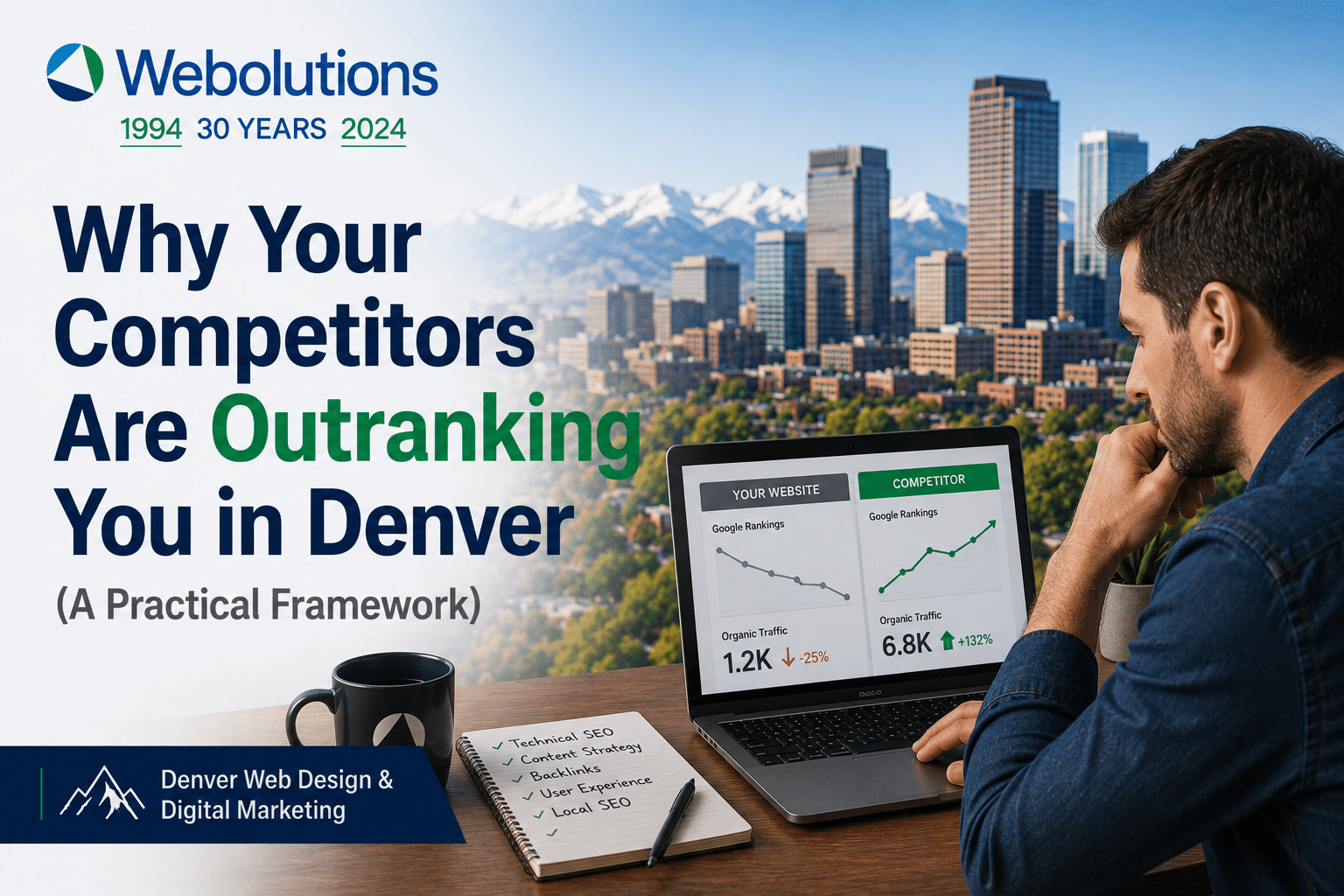
Why Your Competitors Are Outranking You in Denver (A Practical Framework)
If your competitors are outranking you in Denver, it is typically due to stronger authority signals, deeper content coverage, better intent alignment, stronger local…
July 2, 2026
Read Full Article

Denver SEO Web Design & Usability
What Makes a Great Denver Web Design Partner
A great Denver web design partner provides more than design services—they deliver strategic guidance, technical expertise, and long-term support aligned with business growth objectives.…

Denver Online Marketing SEO
Why DIY SEO Doesn’t Work for Denver Businesses (Most of the Time)
DIY SEO often fails for Denver businesses because modern search requires strategic integration, technical expertise, content depth, local authority building, and ongoing optimization. While…
Denver SEO Web Design & Usability
Denver Website Design Costs Explained
Denver website design costs vary widely depending on strategy requirements, customization level, technical complexity, and content development. Businesses working with Webolutions web design and…
Inbound marketing costs 62% less per lead than traditional, outbound marketing.
Get Your Free Proposal
Choose your option and get connected with a Webolutions expert right here in Denver.