
Introduction: Why Pipeline Engineering is a CEO/CMO Imperative
In today’s volatile business environment, executives can no longer afford to treat the sales pipeline as a black box. Growth targets are more ambitious, investors are more demanding, and customer journeys are more fragmented than ever before. Despite heavy investments in CRM systems, marketing automation, and analytics, many CEOs and CMOs admit they still lack clear visibility into what truly drives revenue. This lack of attribution clarity doesn’t just frustrate executives—it erodes confidence, inflates acquisition costs, and stalls sustainable growth.
Enter pipeline engineering: a new executive discipline that treats the revenue pipeline not as a static funnel but as a dynamic system that can be designed, optimized, and scaled. Unlike traditional funnel management, which often focuses on top‑of‑funnel activity or vanity metrics (impressions, clicks, and leads generated), pipeline engineering emphasizes precision, accountability, and predictability. It enables leaders to trace every dollar of growth back to specific initiatives, channels, and interactions—creating the conditions for 3× growth through attribution clarity.
Why this matters now: According to Gartner, 77% of B2B buyers describe their last purchase as complex or difficult, with multiple stakeholders and elongated decision cycles (https://www.gartner.com/en/sales/insights/b2b-buying-journey). At the same time, McKinsey research highlights that companies with advanced analytics and attribution systems achieve 20–30% higher marketing ROI compared to peers (https://www.mckinsey.com/capabilities/growth-marketing-and-sales/our-insights).
Yet most organizations are still stuck with siloed attribution models that fail executives. A Forrester perspective notes that fewer than 40% of B2B marketers are confident in their ability to measure multi‑touch attribution accurately (https://go.forrester.com/blogs/author/katie_linford/). This gap creates misalignment between sales and marketing, undermines confidence in forecasts, and prevents CEOs and CFOs from making investment decisions based on reliable data.
From funnel management to pipeline engineering: The modern B2B buying journey is non‑linear, fragmented, and increasingly digital. Buying committees typically include six to ten decision‑makers, each with unique priorities and information sources (https://www.gartner.com/en/sales/insights/b2b-buying-journey). Pipeline engineering recognizes this complexity and applies systems thinking to design a revenue engine with three goals: (1) Attribution Clarity—ensuring every touchpoint is properly weighted in influencing deals. (2) Predictable Growth—building models that can forecast revenue outcomes with high accuracy. (3) Executive Accountability—creating dashboards that translate pipeline health into financial outcomes CEOs and boards can trust.
The growth multiplier: When executives can see, with confidence, which marketing and sales initiatives drive real revenue, they can reallocate resources quickly, double down on high‑impact strategies, and eliminate wasted spend. Companies using advanced attribution frameworks report significant improvements: Demandbase’s 2023 ABM Benchmark shows higher efficiency and revenue influence in organizations with account‑based attribution; Salesforce reports that 67% of sales leaders say improved pipeline visibility increases win rates (https://www.salesforce.com/resources/research-reports/state-of-sales/); and Deloitte finds that revenue‑aligned marketing and sales organizations are 67% more likely to exceed growth goals (https://www2.deloitte.com/insights/us/en/focus/customer-and-marketing-strategy/aligning-sales-and-marketing.html).
This article explores how executives can lead the shift from fragmented funnel management to holistic pipeline engineering. We examine what pipeline engineering is (and how it differs from funnel management), why attribution clarity is foundational, how AI and predictive analytics transform attribution modeling, the metrics every CEO/CMO should demand, and the cultural shifts required to embed accountability. By mastering pipeline engineering and insisting on attribution clarity, executives can not only drive growth—they can engineer predictable, repeatable 3× performance.
1. What is Pipeline Engineering? (and Why It’s Different from Funnel Management)
For decades, B2B organizations have relied on the concept of the marketing and sales funnel. The funnel, with its familiar stages of awareness, consideration, and decision, has been a useful framework for understanding how prospects move from initial contact to closed business. But as buyer behavior has evolved, the funnel has become less effective as an executive management tool. The modern B2B buying journey is non‑linear, fragmented, and increasingly digital. As a result, executives who want reliable, scalable growth must move beyond funnel management and embrace pipeline engineering.
Funnel management—a legacy approach: The traditional funnel is largely tactical. Marketing teams focus on generating leads at the top of the funnel, nurturing them through campaigns, and passing them to sales at a defined stage. Sales then attempts to close deals, often reporting conversion rates stage by stage. While simple, this approach has major flaws: (1) Activity, not accountability—the funnel emphasizes lead volume, clicks, and campaign activity rather than revenue contribution. (2) Linear assumptions—it assumes buyers move neatly from awareness to decision, ignoring the looping and consensus‑building that characterizes modern B2B buying. (3) Siloed reporting—marketing often measures success in MQLs, while sales focuses on closed deals. Without shared accountability, both sides can claim success even as the business misses revenue targets. Forrester estimates misalignment costs B2B companies materially in annual revenue.
Pipeline engineering—a system of growth accountability: Rather than treating marketing and sales as sequential functions, pipeline engineering views the entire revenue engine as a system that can be designed, optimized, and scaled. It emphasizes attribution clarity, cross‑functional accountability, and continuous optimization. At its core, pipeline engineering answers three executive questions: Where is growth coming from? (attribution clarity across channels, campaigns, and stakeholders). What is the health of our pipeline? (conversion velocity, coverage, and forecast accuracy). How do we accelerate performance? (reallocating resources toward proven growth levers).
Key differences between funnel management and pipeline engineering: Focus—leads and activity vs. revenue and outcomes. Model—linear stages vs. dynamic, non‑linear journeys. Accountability—siloed vs. shared ownership. Measurement—vanity metrics (MQLs, clicks) vs. business outcomes (pipeline velocity, CAC:CLV, ROMI). Role for executives—operational oversight vs. strategic discipline tied to growth. A Salesforce survey found that 82% of sales leaders say pipeline visibility is critical to hitting revenue targets, yet fewer than half feel confident in their current visibility (https://www.salesforce.com/resources/research-reports/state-of-sales/). Pipeline engineering addresses this gap by ensuring executives have real‑time, reliable insights into pipeline health and attribution.
From tactical to strategic discipline: Pipeline engineering elevates pipeline management from an operational activity to an executive discipline. Just as supply chain engineering transformed logistics into a strategic differentiator, pipeline engineering transforms sales and marketing into a designed system for growth. For CEOs, this means moving beyond “how many leads did we generate this quarter?” to asking: How much attributable revenue did marketing generate? What is the pipeline coverage ratio against our revenue targets? Which campaigns or channels have the highest attribution‑adjusted ROI? Are we improving forecast accuracy quarter over quarter? For CMOs and CROs, it creates a shared framework for accountability—a unified view of the pipeline that ties directly to growth outcomes.
Case example: A global SaaS provider shifted from funnel reporting to pipeline engineering by integrating its CRM, marketing automation, and attribution platforms into a unified dashboard. The executive team could see which campaigns influenced deals, the velocity of opportunities through stages, and the projected pipeline coverage against quarterly targets. Within one year, marketing and sales alignment improved dramatically, and the company achieved 2.8× pipeline growth with attribution clarity driving investment decisions.
2. The Attribution Problem: Why Traditional Metrics Fail Executives
At the heart of pipeline engineering lies a fundamental executive challenge: most attribution models are broken. For decades, marketing leaders have tried to prove their impact on revenue through metrics like leads generated, cost per lead, or last‑touch conversions. But in today’s complex, multi‑stakeholder B2B buying journeys, these traditional approaches fail to give CEOs and CFOs the clarity they need to make confident investment decisions.
The limitations of last‑touch attribution: Last‑touch attribution, which gives 100% of the credit for a closed deal to the final interaction, creates dangerous blind spots. It undervalues top‑ and mid‑funnel activities (thought leadership, peer reviews, events), overweights late‑stage interactions (demo requests, pricing), and distorts budget decisions—often cutting awareness‑building investments that shape preference months earlier. Forrester notes that fewer than 40% of B2B marketers are confident in multi‑touch attribution accuracy (https://go.forrester.com/blogs/author/katie_linford/).
The vanity metrics trap: Over‑reliance on impressions, clicks, or form fills can show activity without proving impact. A campaign with 10,000 clicks may look impressive, but if it doesn’t influence qualified pipeline or revenue, it’s noise. A Gartner survey found that 75% of CMOs are under pressure to “do more with less” while simultaneously proving their contribution to growth—making clear attribution even more critical (https://www.gartner.com/en/marketing/research/cmo-spend-survey).
Disconnected systems = disconnected truth: Fragmented stacks—marketing automation, CRM, customer success, finance—produce siloed metrics that don’t add up to an executive‑level view. The result: sales blames marketing for lead quality, marketing blames sales for follow‑up, and finance mistrusts both. LinkedIn’s State of Sales report notes that 87% of leaders say alignment is critical, yet fewer than half describe their organizations as well aligned.
The CFO’s perspective: For CFOs, attribution is about financial confidence. Without clear attribution, forecasts become guesswork and board conversations about marketing ROI lack credibility. Deloitte shows that companies with revenue‑aligned sales and marketing are 67% more likely to exceed growth goals (https://www2.deloitte.com/insights/us/en/focus/customer-and-marketing-strategy/aligning-sales-and-marketing.html).
The strategic cost of poor attribution: Misallocated budgets, wasted resources, eroded trust, and slower growth. Without clarity, organizations fail to double down on proven levers—leaving 2–3× growth potential untapped. Executive takeaway: Traditional attribution models are no longer sufficient; pipeline engineering replaces vanity metrics and broken models with systems that link activity directly to revenue outcomes executives can trust.
3. Building the Foundations of Attribution Clarity
Attribution clarity doesn’t happen by accident. It requires executives to build the right foundation—one that integrates data, applies advanced analytics, and enforces governance so the numbers are trusted at the board level. For CEOs and CMOs, this foundation transforms marketing attribution from a tactical debate into a strategic advantage.
The unified data layer: The first step is eliminating silos between marketing, sales, customer success, and finance systems. Without a unified data layer, executives get fragmented reports that don’t reconcile. Salesforce’s State of Marketing report notes that 71% of CMOs struggle to connect data across platforms, limiting their ability to demonstrate ROI (https://www.salesforce.com/resources/research-reports/state-of-marketing/). The solution is a centralized data architecture—data lakes or warehouses—that consolidates customer and pipeline data into a single source of truth and integrates with CRM/marketing automation for full‑funnel visibility.
AI‑powered attribution models: Once data is unified, advanced models move beyond first/last touch. Multi‑touch attribution distributes credit across interactions; algorithmic attribution uses machine learning to identify the interactions that actually drive conversion and adjusts weights automatically; predictive attribution forecasts which campaigns and channels are most likely to influence future deals. McKinsey reports that companies applying advanced analytics to sales and marketing see 20–30% improvements in ROI (https://www.mckinsey.com/capabilities/growth-marketing-and-sales/our-insights).
Governance for trust: Even the best models fail if executives don’t trust the data. Governance ensures clean inputs, transparent models, and compliance with privacy regulations such as GDPR (https://gdpr.eu/what-is-gdpr/) and CCPA (https://oag.ca.gov/privacy/ccpa). Best practices include data hygiene protocols, model transparency, and executive dashboards that link pipeline and attribution directly to revenue outcomes. Gartner emphasizes that CMOs prioritizing data quality and governance are more likely to earn increased budgets and executive confidence (https://www.gartner.com/en/marketing/research/cmo-spend-survey).
Case example: A Fortune 500 B2B technology company built a unified data warehouse, applied AI‑powered attribution, and instituted governance protocols, creating a single pipeline dashboard shared by the CEO and CFO. Within 12 months, the company reduced budget waste by 20% and increased marketing‑influenced revenue by 35%. Executive takeaway: Attribution clarity rests on a unified data layer, AI‑powered models, and governance frameworks that instill trust.
4. AI and Predictive Attribution: Engineering the Next‑Gen Pipeline
Pipeline engineering reaches its full potential when artificial intelligence is applied to attribution. Traditional models remain reactive—analyzing past activity rather than predicting future outcomes. AI makes attribution predictive, dynamic, and prescriptive, moving the conversation from retrospective reporting to forward‑looking growth orchestration.
From descriptive to predictive: AI‑powered attribution models analyze vast datasets across CRM, marketing automation, customer success, and third‑party intent signals; identify patterns of success by comparing past deals with active opportunities; and recommend optimal resource allocation to campaigns, channels, and accounts most likely to yield results. McKinsey finds companies using AI in sales and marketing can generate 3–15% increases in revenue and 10–20% cost reductions (https://www.mckinsey.com/capabilities/quantumblack/our-insights/the-state-of-ai-in-2023-adoption-and-impact).
Forecasting with precision: One of the greatest frustrations for executives is unreliable forecasting. Gartner notes that fewer than 50% of sales leaders have confidence in their forecasts (https://www.gartner.com/en/sales/insights/sales-forecasting). Predictive attribution addresses this by factoring in real‑time buyer behavior, intent signals, and win rates to generate more accurate projections. If data shows that CFO webinar attendance plus multiple high‑intent website visits correlates with closed‑won outcomes, the model assigns higher predictive value to those interactions—improving forecast confidence.
Pipeline health scoring: AI enables dynamic health scoring of opportunities based on engagement quality, stakeholder alignment, and deal velocity. Unlike static CRM probabilities, AI continuously updates scores as new signals arrive, giving CEOs, CMOs, and CROs real‑time visibility into risks and opportunities so they can intervene before deals stall.
Optimizing attribution across channels: Modern buyers interact across dozens of touchpoints—social media, analyst reports, peer communities, events. AI models can dynamically re‑weight channels based on performance, factor context such as timing and role, and continuously learn as campaigns run. This adaptive attribution lets executives invest confidently, directing spend to true drivers of pipeline velocity.
Case example: A global enterprise SaaS firm combined CRM data, intent signals, and engagement scoring to identify the top 10% of accounts most likely to close within 90 days. Marketing focused campaigns on those accounts while sales prioritized outreach. Results: 25% improvement in forecast accuracy, 30% faster pipeline velocity, and 18% increase in closed‑won revenue in one fiscal year. Executive takeaway: Predictive attribution is becoming table stakes for achieving 3× growth with confidence.
5. Engineering a Growth Multiplier: 3× Revenue Through Attribution
Pipeline engineering is not just about fixing reporting gaps—it’s about creating the conditions for exponential growth. When attribution clarity becomes embedded in executive decision‑making, it unlocks the ability to grow faster, more predictably, and more profitably. Companies that embrace attribution clarity often find they can achieve up to 3× improvement in revenue efficiency—by systematically reallocating resources to proven growth drivers.
The growth multiplier effect: (1) Pipeline Velocity—deals move faster when executives know which touchpoints accelerate decisions and which create friction. (2) Resource Optimization—budgets flow to high‑performing campaigns, channels, and accounts instead of underperformers. (3) Forecast Confidence—leaders gain confidence in revenue projections, enabling bold but informed investments. Deloitte shows aligned organizations are 67% more likely to exceed growth goals (https://www2.deloitte.com/insights/us/en/focus/customer-and-marketing-strategy/aligning-sales-and-marketing.html).
Realigning budgets for ROI: Attribution clarity enables smart reallocation toward initiatives that demonstrably influence pipeline. Demandbase’s benchmark report found account‑based attribution frameworks drive a 20% lift in marketing efficiency and significantly higher revenue influence from targeted campaigns.
Driving pipeline velocity: Attribution clarity reveals which factors accelerate opportunities and which cause delays (e.g., analyst report influence, early CFO engagement, multi‑channel engagement patterns). Armed with these insights, executives can design GTM strategies that engineer velocity into the pipeline, reducing cycle times and increasing throughput.
Case example: A global enterprise software provider faced stalled growth despite heavy marketing investment. By unifying data and deploying predictive attribution, leaders discovered only 30% of campaigns contributed meaningfully to revenue; executive webinars converted at 2.5× the average rate; and 30% of sales time was spent on low‑probability leads. Reallocating 40% of budget to top‑performing campaigns and focusing sales on the top 20% of accounts flagged by the model produced a 3× increase in marketing‑sourced pipeline and a 2.4× improvement in closed‑won revenue within 18 months.
Executive takeaway: Attribution clarity is a growth multiplier. By engineering systems that show exactly where revenue comes from, executives can compress cycle times, optimize resources, and deliver predictable growth—unlocking the potential for 3× revenue performance.
6. The Executive Dashboard: Metrics That Matter
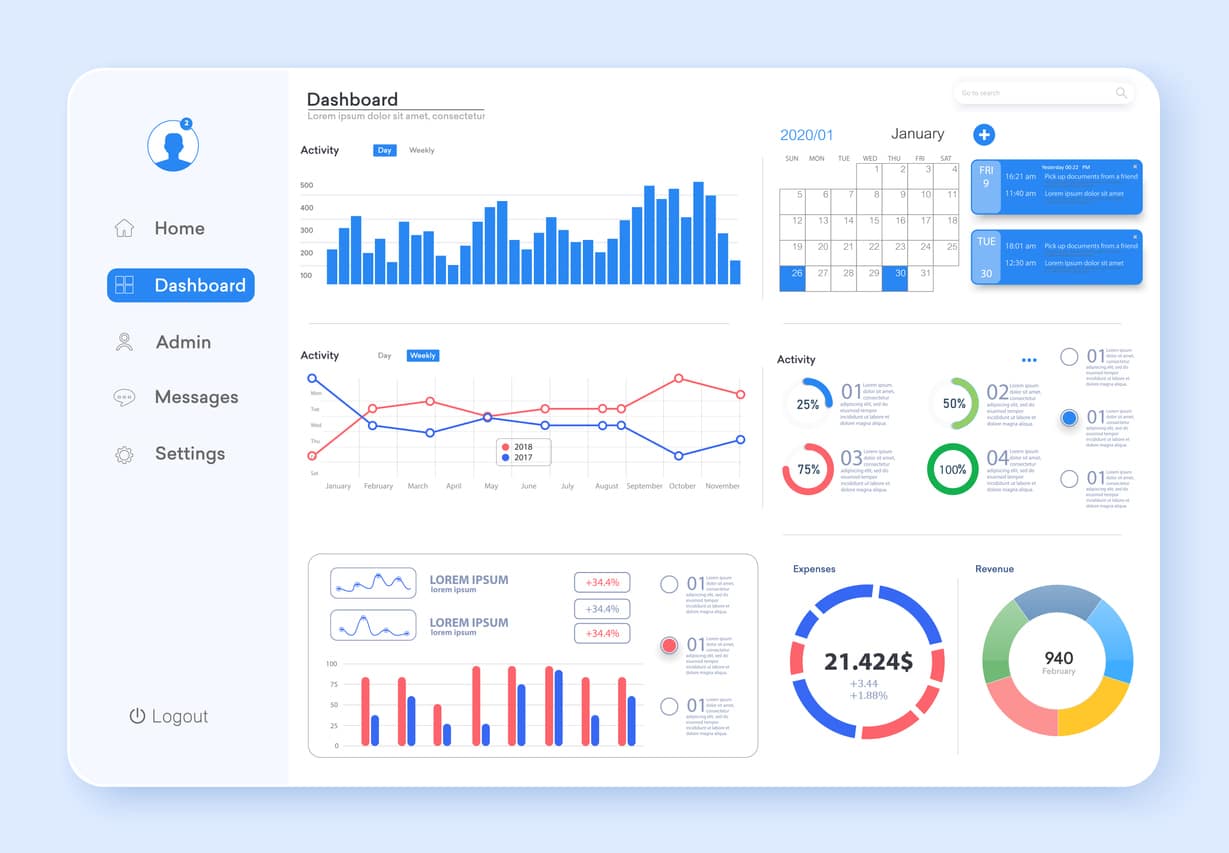
Executives don’t need more data—they need the right data, presented in a way that drives clarity and confident decisions. A well‑designed executive pipeline dashboard translates complex attribution insights into metrics that CEOs, CMOs, and CFOs can act on. Unlike static reports that drown leaders in activity metrics, these dashboards highlight outcomes tied directly to revenue, profitability, and enterprise value.
From vanity metrics to value metrics: Pipeline reporting is often cluttered with impressions, open rates, or MQL counts. While useful tactically, they don’t provide strategic insight. Forrester warns that measurement myopia prevents B2B organizations from understanding what truly drives revenue (https://go.forrester.com/blogs/author/katie_linford/). Executives should demand dashboards that focus on value metrics—measures that connect directly to growth outcomes.
Core metrics for the executive dashboard: (1) Pipeline Coverage Ratio—the ratio of pipeline value to revenue targets (best practice often 3–5× depending on win rates and deal sizes). (2) Pipeline Velocity—the speed at which opportunities move between stages; AI shows which activities accelerate or stall velocity. (3) Attribution‑Adjusted ROMI—ROI calculated with attribution clarity, factoring multi‑touch and predictive models. (4) CAC:CLV Ratio—customer acquisition cost vs. lifetime value, a core CFO metric for sustainable growth. (5) Forecast Accuracy—the degree to which pipeline forecasts match closed revenue; Gartner notes fewer than 50% of sales leaders trust forecast accuracy (https://www.gartner.com/en/sales/insights/sales-forecasting). (6) Retention and Expansion Rates—critical in subscription and enterprise models.
Real‑time, not retrospective: With AI‑powered attribution integrated into RevOps platforms, dashboards can be real‑time, dynamic, and interactive: CEOs see current pipeline health; CMOs measure marketing’s contribution instantly; CFOs validate assumptions before board updates. Salesforce reports that 67% of high‑performing sales orgs rely on AI to guide forecasting and pipeline management (https://www.salesforce.com/resources/research-reports/state-of-sales/).
Cross‑functional alignment: An effective executive dashboard is a shared accountability tool. Aligning definitions (e.g., qualified opportunity) turns the dashboard into a unifying force. LinkedIn’s State of Sales emphasizes that organizations with strong sales‑marketing alignment achieve faster revenue growth.
Case example: A B2B cybersecurity company replaced siloed reports with a unified executive dashboard built on AI attribution. Tracking coverage, velocity, and ROMI in real time, the CFO presented a 22% forecast accuracy improvement to the board; the CEO increased investment in programs with demonstrable ROI. Within a year, revenue grew 2.5×. Executive takeaway: The right dashboard, powered by attribution clarity, empowers faster, more confident decisions and boardroom confidence.
7. Overcoming Cultural and Organizational Barriers
Even the most sophisticated attribution systems and dashboards will fail if the organizational culture resists change. Attribution clarity requires not only technology but also alignment, incentives, and trust. For CEOs and CMOs, this means addressing the cultural and organizational barriers that often undermine pipeline engineering.
The root cause: misaligned incentives. Marketing is often measured on leads (MQLs) while sales is measured on bookings. When targets diverge, so do behaviors: marketing optimizes for volume, sales dismisses leads as low quality, and both functions can claim success while revenue goals are missed. HubSpot’s State of Marketing report finds companies with strong sales‑marketing alignment achieve 208% higher marketing revenue (https://www.hubspot.com/state-of-marketing).
Organizational silos persist: marketing owns lead gen, sales owns pipeline progression, customer success owns retention/expansion—often with separate systems and KPIs. Without cross‑functional integration, attribution models face resistance. LinkedIn’s State of Sales notes that while 87% of leaders agree alignment is critical, fewer than half say their orgs are well aligned.
Building a culture of revenue accountability: (1) Unified metrics—replace siloed KPIs with shared measures (coverage, velocity, attribution‑adjusted ROMI). (2) Revenue councils—cross‑functional leadership reviews pipeline health together. (3) Transparent dashboards—give all teams access to the same attribution data. (4) Aligned incentives—tie compensation to shared revenue outcomes, not just departmental activity.
Change management and communication: Communicate the “why”—how attribution clarity benefits everyone; highlight quick wins (velocity or forecast accuracy) to build momentum; empower champions across functions. Deloitte’s research on organizational change shows companies with strong change capabilities are 3.5× more likely to outperform peers (https://www2.deloitte.com/us/en/insights/focus/human-capital-trends/2016/organizational-change-management.html).
Trust as the cultural multiplier: Teams must believe models are fair, accurate, and unbiased. Make attribution rules clear, audit models, and invite stakeholder input. Case example: A global industrial tech company launched attribution dashboards but faced sales resistance. The CEO formed a Revenue Council and linked bonuses to shared outcomes. Within six months, pipeline velocity improved 18%, forecast accuracy rose 20%, and resistance faded as evidence of fairness and shared success mounted.
Executive takeaway: Cultural and organizational barriers are often harder to solve than technical ones. By unifying metrics, aligning incentives, and fostering trust, CEOs and CMOs can embed revenue accountability as a cultural norm—turning attribution clarity into a durable advantage.
8. The CEO/CMO Playbook for Pipeline Engineering
Pipeline engineering is not a project to delegate—it is a leadership discipline that must be championed by the CEO and CMO together. Building attribution clarity and engineering a predictable, scalable pipeline requires a structured playbook that combines strategy, technology, and cultural change.
Step 1: Define shared revenue outcomes. Shift focus away from siloed departmental KPIs toward shared growth outcomes. Jointly define revenue goals, pipeline coverage targets, and attribution standards that apply across the revenue org. Marketing should not be evaluated solely on MQLs, nor sales solely on bookings; both should share accountability for pipeline velocity, attribution‑adjusted ROMI, and forecast accuracy. Deloitte shows tightly aligned teams are 67% more likely to exceed growth goals (https://www2.deloitte.com/insights/us/en/focus/customer-and-marketing-strategy/aligning-sales-and-marketing.html).
Step 2: Invest in a unified data architecture. Create a single source of truth for revenue data by integrating CRM, marketing automation, customer success, and finance. Consolidate buyer interactions from first touch through renewal, enable multi‑touch and predictive attribution, and provide real‑time dashboards. Salesforce reports 71% of CMOs struggle to connect data across platforms (https://www.salesforce.com/resources/research-reports/state-of-marketing/).
Step 3: Operationalize AI‑powered attribution. Move beyond static models to predictive, AI‑powered attribution enabling dynamic weighting of touchpoints, forecast accuracy that boards can trust, and prioritization of high‑potential accounts. McKinsey finds AI in sales/marketing drives 3–15% revenue growth and 10–20% cost reductions (https://www.mckinsey.com/capabilities/quantumblack/our-insights/the-state-of-ai-in-2023-adoption-and-impact).
Step 4: Establish governance and accountability. Earn trust with data hygiene protocols, regular model audits, and compliance with GDPR (https://gdpr.eu/what-is-gdpr/) and CCPA (https://oag.ca.gov/privacy/ccpa). Gartner notes CMOs who prioritize governance and financial accountability are more likely to secure budget growth (https://www.gartner.com/en/marketing/research/cmo-spend-survey).
Step 5: Build a culture of revenue collaboration. Lead by example: create revenue councils, align compensation to cross‑functional success, and share transparent dashboards. HubSpot shows aligned revenue teams achieve 208% higher marketing revenue (https://www.hubspot.com/state-of-marketing).
Step 6: Report to the board with clarity. Present dashboards that connect marketing and sales directly to financial outcomes: pipeline coverage, forecast accuracy, CAC:CLV, and attribution‑adjusted ROMI. Case example: A global B2B services firm followed this playbook and, within three years, increased forecast accuracy by 28%, improved velocity by 22%, and achieved 3.1× revenue growth—credited to attribution clarity and pipeline engineering.
Executive takeaway: Pipeline engineering is about executive leadership. By following a structured playbook, CEOs and CMOs can engineer predictable, scalable growth—the foundation for delivering on 3× growth with attribution clarity.
Conclusion: Turning Pipeline Engineering into a Strategic Growth Engine
In today’s competitive environment, executives face relentless pressure to deliver predictable growth. Yet many still operate with partial visibility into their revenue engines, relying on fragmented reports and outdated attribution models. The result: wasted spend, eroded trust, and missed opportunities. Pipeline engineering offers a path forward—transforming the pipeline from a reporting mechanism into a strategic growth engine. By embedding attribution clarity into executive decision‑making, CEOs and CMOs can build revenue systems that are predictable, scalable, and aligned to enterprise value.
From funnel management to pipeline engineering: With six to ten decision‑makers involved, long decision cycles, and digitally driven research (https://www.gartner.com/en/sales/insights/b2b-buying-journey), executives need precision. Pipeline engineering treats revenue as an engineered system—where attribution is accurate, accountability is shared, and growth levers are intentionally designed.
Attribution clarity as the growth multiplier: When leaders know which campaigns, touchpoints, and interactions drive revenue, they can reallocate budgets to high‑performing initiatives, engineer velocity into the pipeline, and build board‑level trust in forecasts. Demandbase shows organizations with attribution clarity see higher marketing efficiency and stronger ROI from account‑based strategies.
The executive imperative: (1) Unified revenue outcomes. (2) Unified data and AI attribution. (3) Governance and trust—align to GDPR (https://gdpr.eu/what-is-gdpr/) and CCPA (https://oag.ca.gov/privacy/ccpa). (4) Cultural alignment—revenue councils, aligned incentives, and transparent dashboards. (5) Board‑level reporting—clear metrics linking marketing and sales to financial performance. Deloitte confirms aligned organizations are 67% more likely to exceed growth goals (https://www2.deloitte.com/insights/us/en/focus/customer-and-marketing-strategy/aligning-sales-and-marketing.html).
Turning uncertainty into advantage: Volatility is now the norm, but AI‑enabled analytics let organizations dynamically reallocate resources, improve forecasting, and sustain growth. McKinsey reports companies applying advanced analytics and AI to revenue operations achieve 3–15% revenue increases and 10–20% cost reductions (https://www.mckinsey.com/capabilities/quantumblack/our-insights/the-state-of-ai-in-2023-adoption-and-impact).
The path forward: The future of growth will be written by executives who engineer their pipelines with clarity and precision. Pipeline engineering, anchored in attribution clarity, gives CEOs and CMOs the ability to forecast with confidence, optimize investments with evidence, and align the organization around shared revenue accountability. Spencer Stuart notes that CMO tenure remains among the shortest in the C‑suite, underscoring the need for clear CEO‑CMO alignment (https://www.spencerstuart.com/research-and-insight/cmo-tenure). Executive takeaway: Pipeline engineering is an executive discipline—one that can turn attribution clarity into a competitive advantage and drive 3× growth in the years ahead.
Additional Resources
- Gartner: B2B Buying Journey — https://www.gartner.com/en/sales/insights/b2b-buying-journey
- Forrester: B2B Marketing Measurement — https://go.forrester.com/blogs/author/katie_linford/
- Salesforce: State of Marketing — https://www.salesforce.com/resources/research-reports/state-of-marketing/
- Salesforce: State of Sales — https://www.salesforce.com/resources/research-reports/state-of-sales/
- McKinsey: State of AI in 2023 — https://www.mckinsey.com/capabilities/quantumblack/our-insights/the-state-of-ai-in-2023-adoption-and-impact
- Deloitte: Aligning Sales and Marketing — https://www2.deloitte.com/insights/us/en/focus/customer-and-marketing-strategy/aligning-sales-and-marketing.html
- HubSpot: State of Marketing — https://www.hubspot.com/state-of-marketing
- GDPR Overview — https://gdpr.eu/what-is-gdpr/
- CCPA Overview — https://oag.ca.gov/privacy/ccpa
- Spencer Stuart: CMO Tenure Study — https://www.spencerstuart.com/research-and-insight/cmo-tenure
See my previous post: Top Marketing Automation Tools for 2025

Drawing from experience in web design, SEO, and digital marketing strategy, these articles are designed to help business leaders move beyond fragmented tactics and toward a more structured, performance-driven approach to digital marketing.Vargo was awarded 2019 Top SEO Consultants in the U.S..Learn more about John Vargo.
- The Anatomy of a High-Converting Website - April 3, 2026
- Web Design for Denver Nonprofits: Driving Engagement, Trust, and Donations - April 2, 2026
- Why Beautiful Websites Don’t Always Convert - April 1, 2026