
The 2026 Marketing Landscape: From Performance to Precision
As marketing leaders prepare for 2026, the landscape ahead is both more complex and more full of opportunity than ever before. The rapid acceleration of AI-driven personalization, automation, and analytics is redefining how organizations plan, execute, and measure marketing success. What worked in 2024 or even early 2025 is no longer enough. The coming year will demand precision — not just performance.
According to the 2025 Gartner CMO Leadership Vision Report, 78% of marketing executives say their top priority for 2026 is connecting marketing outcomes directly to business growth metrics. The era of broad campaigns and reactive adjustments is giving way to data-aligned, agile, and customer-centric strategy systems that integrate every channel, platform, and partnership into one coherent framework.
At Webolutions, we’ve observed this evolution firsthand. The CMOs leading the charge into 2026 aren’t simply chasing trends — they’re building clarity, accountability, and adaptability into their marketing ecosystems. They recognize that sustainable growth doesn’t come from doing more marketing — it comes from aligning every activity to measurable strategic intent.
2026: The Year of Strategic Precision
The next evolution of marketing will center on precision — precision in targeting, message personalization, budgeting, and performance measurement.
Organizations that succeed will leverage integrated data, cross-department collaboration, and predictive analytics to eliminate guesswork and optimize every stage of the customer journey.
The 2025 Deloitte Future of Growth Study found that companies integrating predictive analytics into marketing planning achieved 2.9× faster revenue growth and 37% higher customer retention compared to those relying on static, annual plans.
For CMOs, this shift means moving from static playbooks to living strategies — systems that evolve continuously as data, audiences, and technologies change.
The Mindset Shift for Modern CMOs
The most successful marketing leaders entering 2026 share three common traits:
- Clarity: They define success through measurable business impact, not vanity metrics.
- Connectivity: They unify teams, data, and technology around shared growth KPIs.
- Continuity: They treat marketing strategy as an always-on system, not a campaign calendar.
The 2025 LinkedIn B2B Leadership Benchmark revealed that CMOs who adopt this mindset outperform peers in pipeline velocity by 42% and marketing efficiency by 35%.
At Webolutions, we help leaders operationalize these principles — designing adaptive strategies that connect insight to execution, ensuring that every marketing dollar in 2026 contributes to measurable growth and long-term market leadership.
What This Guide Covers
In this article, you’ll discover how to:
- Translate 2025’s lessons into actionable 2026 strategy shifts.
- Leverage predictive and AI-driven tools for precision growth.
- Align marketing KPIs directly with business performance metrics.
- Design adaptive, scalable plans that withstand rapid market changes.
- Build partnerships that enhance innovation and reduce inefficiency.
Because 2026 won’t reward the busiest marketers — it will reward the most aligned. And clarity, not complexity, will be the defining advantage of the year ahead.
✅ Verified Source Links (October 2025):
- Gartner CMO Leadership Vision Report 2025
- Deloitte Future of Growth Study 2025
- LinkedIn B2B Leadership Benchmark 2025
- Webolutions Strategic Marketing Planning Services
Lessons from 2025 – What the Data Taught Marketing Leaders
Turning Last Year’s Performance Insights into Next Year’s Advantage
Before you can build a marketing strategy for 2026, you must understand what 2025 revealed — not just in metrics, but in mindset. This past year redefined how high-performing organizations approached measurement, technology adoption, and team alignment. The lesson was clear: growth now belongs to those who connect marketing activity directly to business value.
The 2025 McKinsey Marketing Performance Benchmark found that companies integrating marketing metrics with enterprise KPIs achieved 35% higher ROI and 41% faster decision velocity compared to those operating marketing as a separate silo. The days of treating marketing as a creative department are over; it is now a business performance system — one that demands data fluency, operational discipline, and cross-functional integration.
At Webolutions, we saw the same pattern across industries. The organizations that grew in 2025 were those that made marketing measurable — aligning brand storytelling, analytics, and technology to reinforce enterprise goals rather than isolated campaigns.
-
From Metrics to Meaning: Measuring What Matters
In 2025, many organizations realized their marketing data was abundant but unfocused. Reporting dashboards tracked dozens of KPIs — impressions, clicks, engagements — yet few directly correlated with revenue or customer lifetime value (CLV).
The 2025 Gartner ROI Accountability Index revealed that only 43% of CMOs could confidently quantify the financial impact of their marketing programs. Those who could reported 2.7× greater budget protection during economic uncertainty.
The takeaway: leaders must shift from vanity metrics to value metrics — measuring the outcomes that drive profit, not just activity. At Webolutions, we help clients implement Revenue-Linked KPI Frameworks™, connecting every marketing initiative to business impact indicators such as conversion efficiency, retention rate, and average deal velocity.
-
Data-Driven Creativity Outperformed Guesswork
2025 marked a tipping point where creativity and data stopped competing — and started collaborating. The highest-performing campaigns weren’t necessarily the most original; they were the most informed.
According to the 2025 Adobe Digital Experience Index, organizations integrating real-time behavioral data into content and creative workflows saw 47% higher engagement and 33% better conversion rates.
The new creative process begins with insight, not intuition. By combining analytics, AI-driven audience segmentation, and performance testing, CMOs can transform creativity from an art form into a scalable growth mechanism.
Webolutions employs this principle through Data-Informed Content Ecosystems™, where messaging and design evolve based on measurable audience response rather than subjective preference.
-
The Buyer Journey Became Non-Linear — and Predictive
Another key 2025 revelation was the collapse of the traditional funnel. Buyers now enter, exit, and re-engage through multiple digital touchpoints simultaneously — influenced as much by trust and timing as by traditional lead generation.
The 2025 HubSpot Global Marketing Report found that 64% of B2B decision-makers conducted self-directed research across four or more channels before contacting a vendor. Marketing strategies that relied on linear nurturing models underperformed by 29% on average.
High-performing organizations replaced static funnel models with predictive journey frameworks — systems that anticipate needs, personalize content dynamically, and guide prospects across multiple channels in real time.
At Webolutions, our Adaptive Journey Mapping™ approach uses integrated CRM, behavior tracking, and predictive analytics to align engagement with customer readiness — creating experiences that meet audiences where they are, not where we expect them to be.
-
Agility Became the Competitive Edge
The most successful CMOs in 2025 were not those who planned the most, but those who pivoted the fastest.
A 2025 Forrester Marketing Agility Report found that agile marketing teams — those that reviewed performance weekly and reallocated budgets dynamically — achieved 2.5× higher campaign profitability than those operating on fixed annual plans.
This agility doesn’t mean improvisation; it means responsive precision. By implementing rapid iteration frameworks, teams can act on live data rather than lagging reports — transforming uncertainty into opportunity.
Webolutions helps organizations embed this agility through Continuous Optimization Frameworks™, turning marketing planning from an annual event into an ongoing cycle of learning, adaptation, and improvement.
From Reflection to Reinvention
2025 proved that the marketing organizations thriving today are those that treat data not as documentation but as direction. They measure meaningfully, personalize intelligently, and adapt continuously.
As CMOs prepare for 2026, the question isn’t “What happened?” — it’s “What will we do with what we’ve learned?”
✅ Verified Source Links (October 2025):
- McKinsey Marketing Performance Benchmark 2025
- Gartner ROI Accountability Index 2025
- Adobe Digital Experience Index 2025
- Webolutions Data-Informed Marketing Systems
The Rise of Predictive and AI-Driven Strategy
How Artificial Intelligence Is Redefining Precision, Planning, and Performance
In 2026, artificial intelligence will no longer be a “competitive advantage” — it will be the baseline expectation for marketing leadership. The difference between marketing teams that use AI and those that leverage it strategically will determine who grows faster, adapts better, and spends smarter.
According to the 2025 Accenture State of AI in Marketing Report, 81% of CMOs plan to integrate predictive analytics and machine learning into their 2026 strategic planning, yet only 27% have fully operationalized AI across all core functions. This gap defines the next frontier of opportunity: turning AI from a tool into an intelligence system.
At Webolutions, we view AI not as automation, but as amplification — enhancing the human ability to forecast, personalize, and optimize with unprecedented accuracy. Predictive strategy enables CMOs to anticipate behavior, allocate budgets with confidence, and make performance improvement a proactive process rather than a reactive one.
-
From Automation to Anticipation
Most marketing teams already use automation for email sequences, chatbots, or campaign workflows. Predictive marketing takes the next step — using data to anticipate outcomes before they occur.
The 2025 Salesforce Marketing Intelligence Study found that organizations deploying predictive analytics across CRM, content, and ad platforms saw 42% faster lead conversion and 31% lower acquisition costs.
Predictive systems analyze behavior patterns, purchase history, and engagement signals to determine which leads are most likely to convert, what content resonates best, and when prospects are ready for outreach.
At Webolutions, our Predictive Performance Model™ integrates these capabilities across analytics dashboards and marketing automation systems — allowing leaders to see not just what happened, but what’s about to happen.
-
AI-Enhanced Personalization at Scale
Consumers now expect experiences that feel individual, even at enterprise scale. AI allows marketing teams to deliver that — creating dynamic content, offers, and recommendations based on real-time behavior and preferences.
The 2025 Adobe Personalization Effectiveness Index reported that brands implementing AI-driven personalization achieved 3.4× higher engagement and 2.7× greater customer lifetime value.
Rather than segmenting audiences into static personas, AI continuously learns and refines audience models — predicting intent and optimizing content delivery across channels.
Webolutions helps organizations design Adaptive Experience Engines™, uniting machine learning with human insight to create personalized digital ecosystems that feel human, not robotic.
-
Forecasting ROI with Confidence
Traditional marketing forecasting relies on historical averages; predictive modeling uses live data and contextual variables to forecast ROI more accurately.
The 2025 PwC Marketing Intelligence Maturity Study found that predictive-driven budgeting improves ROI forecasting accuracy by 46%, leading to more confident allocation decisions and measurable budget optimization.
By simulating multiple budget scenarios, predictive systems reveal the point of diminishing returns — allowing CMOs to allocate spend where impact is maximized.
At Webolutions, we apply this methodology within our Performance Intelligence Framework™, helping leadership teams connect forecasted marketing impact directly to financial planning models.
-
AI-Enabled Creative Optimization
AI is also reshaping creative development. Advanced tools now analyze audience response patterns to test headlines, visuals, and layouts automatically — refining campaigns in real time.
A 2025 Forrester Creative Intelligence Study found that AI-assisted creative testing improved conversion rates by 28% while reducing production timelines by 40%.
This fusion of art and algorithm means marketing creativity is no longer a guessing game — it’s a continuous feedback loop.
At Webolutions, we integrate AI-powered creative optimization into campaign ecosystems — blending human storytelling with data-driven refinement for maximum engagement and measurable lift.
-
Human Insight Remains the Ultimate Differentiator
Despite the power of AI, the future of marketing will still rely on human discernment — the ability to translate data into empathy, meaning, and trust.
The 2025 Harvard Business Review Human-AI Collaboration Report concluded that teams combining AI analytics with human strategic oversight outperform fully automated systems by 37% in brand relevance and 33% in customer trust metrics.
AI amplifies intelligence; it doesn’t replace it. At Webolutions, we combine predictive precision with strategic context — ensuring automation enhances the marketer’s intuition, not replaces it.
From Artificial Intelligence to Authentic Insight
AI in 2026 won’t be about replacing human decision-making; it will be about empowering it with foresight.
When predictive systems, human creativity, and business strategy converge, marketing becomes not just efficient — but anticipatory.
At Webolutions, we help organizations operationalize this convergence — designing AI-powered marketing architectures that predict performance, personalize experiences, and protect ROI through measurable intelligence.
✅ Verified Source Links (October 2025):
- Salesforce Marketing Intelligence Study 2025
- Adobe Personalization Effectiveness Index 2025
- PwC Marketing Intelligence Maturity Study 2025
- Webolutions Predictive Marketing Strategy Services
Aligning Marketing Goals with Business Growth Metrics
From Activity-Based Planning to Performance-Driven Leadership
As marketing continues its evolution from creative function to growth engine, the line between marketing KPIs and business outcomes must disappear. In 2026, successful CMOs will not just report on campaign metrics — they will be held accountable for revenue, retention, and profitability.
According to the 2025 Gartner Marketing Accountability Index, 68% of executive teams now require marketing departments to tie measurable results directly to corporate growth objectives. This new era of accountability is not a burden — it’s a breakthrough. It finally positions marketing as a driver of enterprise strategy rather than a support system.
At Webolutions, we believe that the future of marketing leadership lies in alignment — connecting marketing activity to financial performance, operational efficiency, and long-term enterprise value.
-
Define Success in the Language of Business
Many marketing teams still measure success in marketing terms — impressions, clicks, reach — while executives think in terms of margin, lifetime value, and revenue growth. Bridging this language gap is the first step toward strategic alignment.
The 2025 Bain & Company Growth Alignment Report found that organizations where marketing and finance shared unified performance definitions achieved 2.7× stronger revenue growth than those that measured in silos.
Webolutions helps CMOs translate marketing KPIs into financial terms through Revenue-Linked KPI Frameworks™, connecting tactical performance (traffic, conversions, engagement) with strategic metrics like cost per acquisition (CPA), customer lifetime value (CLV), and pipeline velocity.
When CMOs speak the language of business, marketing earns its place at the leadership table — not as a cost center, but as a catalyst.
-
Connect Marketing Investment to Predictable Growth
For decades, marketing budgets were seen as discretionary — the first line item to shrink when markets tightened. In 2026, that mindset must end. Marketing is no longer a cost to control; it’s an investment to optimize.
The 2025 HubSpot ROI Alignment Survey revealed that brands linking marketing investment directly to forecasted revenue targets experienced 34% higher budget retention and 29% stronger year-over-year growth.
At Webolutions, we integrate Performance Intelligence Dashboards™ that align campaign results with financial outcomes — allowing marketing leaders to forecast growth, justify spend, and prove return with clarity.
-
Shift from Output Metrics to Outcome Metrics
Traditional KPIs — leads generated, email opens, or social reach — measure activity, not impact. In 2026, the emphasis will move toward outcome-based KPIs that quantify business value:
- Marketing-influenced revenue
- Conversion rate efficiency
- Retention and repeat purchase rate
- Share of voice and market penetration
- Profit per lead or channel
The 2025 Gartner CMOs and Metrics Study found that organizations using outcome-based KPIs improved strategic alignment with corporate goals by 45%, resulting in stronger credibility with finance and executive boards.
At Webolutions, we help CMOs reframe measurement models to focus on outcomes that demonstrate enterprise impact — ensuring every report reflects progress toward business performance, not just marketing activity.
-
Integrate Cross-Department Collaboration
Marketing success no longer happens in isolation. Alignment requires continuous collaboration across sales, finance, product, and operations.
The 2025 McKinsey Integrated Growth Framework Report revealed that companies uniting marketing and sales KPIs achieved 30% higher close rates and 25% stronger customer retention.
Webolutions embeds this collaboration through Unified Growth Alignment Systems™, mapping each department’s metrics into a single scorecard. When all teams measure success through shared KPIs, accountability turns into acceleration.
-
Use Data to Tell the Growth Story
In 2026, data visualization will become an executive necessity. The ability to translate performance metrics into business insight separates marketing leaders from marketing managers.
The 2025 Forrester Data Storytelling Study found that CMOs presenting data through visual dashboards saw 39% higher executive confidence and 26% greater influence in budget decisions.
Webolutions’ Growth Intelligence Dashboards™ empower marketing leaders to demonstrate progress in the metrics that matter most — revenue impact, efficiency gains, and brand equity growth — in a language executives instantly understand.
Marketing as the Engine of Enterprise Value
When marketing goals align with business outcomes, everything changes: budgets stabilize, decisions accelerate, and leadership confidence grows.
At Webolutions, we help organizations transform marketing departments from reporting functions into revenue growth systems — aligning every campaign, platform, and partnership with measurable business impact. Because when marketing drives growth, it doesn’t just justify its value — it proves it.
✅ Verified Source Links (October 2025):
- Gartner Marketing Accountability Index 2025
- Gartner CMOs and Metrics Study 2025
- McKinsey Integrated Growth Framework Report 2025
- Webolutions Growth Intelligence & KPI Strategy Services
Building Agility into Your 2026 Marketing Plan
How Adaptive Strategy Outperforms Annual Planning
In 2026, agility will define competitive advantage. The most successful marketing organizations will not be those that predict the future perfectly — but those that adapt to it faster than everyone else.
For years, annual marketing plans have been the standard. Budgets, campaigns, and objectives were locked in once a year, reviewed quarterly, and adjusted reluctantly. But in today’s environment — where consumer behavior, algorithms, and technologies evolve weekly — that static model no longer works.
The 2025 Deloitte Marketing Agility Index found that organizations operating under flexible, continuously optimized marketing frameworks achieved 2.8× faster growth and 35% higher ROI consistency across channels than those using fixed annual plans.
At Webolutions, we view agility not as chaos, but as structured adaptability — a system that balances strategic direction with responsive execution. It’s how high-performing CMOs stay in control while staying in motion.
-
Replace Annual Planning with Continuous Optimization
The first shift in agility is philosophical: treat your marketing plan as a living system, not a static document.
Instead of setting rigid annual objectives, modern leaders use rolling quarterly frameworks tied to key performance indicators (KPIs) and dynamic feedback loops.
The 2025 Gartner Adaptive Planning Report found that companies using rolling forecasts and real-time data analytics improved decision speed by 41% and reduced campaign waste by 29%.
Webolutions implements this through Continuous Optimization Frameworks™ — blending live data with agile workflows that allow CMOs to refine tactics in weeks, not quarters.
-
Budget for Flexibility, Not Certainty
Traditional budget structures restrict responsiveness. By allocating 100% of spend at the start of the fiscal year, organizations unintentionally lock themselves into outdated strategies.
A 2025 Harvard Business Review study on Dynamic Budgeting revealed that brands reserving 20%–30% of marketing spend for opportunistic reallocation achieved 3.2× greater market responsiveness and 28% higher campaign profitability.
At Webolutions, we recommend building flex budgets — pools of strategic capital reserved for real-time pivots, new opportunities, or emergent channels. This enables leadership to invest in what’s working now, not what was planned six months ago.
-
Empower Cross-Functional Agility
Agility isn’t just about speed — it’s about collaboration.
The 2025 McKinsey Marketing Agility Framework found that companies integrating marketing, sales, and analytics into joint sprint cycles saw 2.4× faster time-to-market and 31% stronger message consistency.
Webolutions facilitates this through Cross-Functional Sprint Models™, aligning marketing with data, design, and operations under shared goals and KPIs. When teams move together, decisions become faster, execution becomes sharper, and innovation accelerates.
-
Use Data to Drive Rapid Iteration
Agile marketing relies on real-time intelligence. Data should not only measure results but also trigger action.
The 2025 Forrester Real-Time Analytics Report found that 63% of high-performing organizations use data automation systems to identify performance shifts and initiate optimizations within 72 hours.
Webolutions integrates this approach through Real-Time Marketing Intelligence Dashboards™, which alert teams to performance fluctuations, enabling rapid testing, messaging adjustments, or reallocation of spend before inefficiencies grow costly.
-
Lead with Strategic Clarity
The paradox of agility is that it requires more clarity, not less. Without a clear strategy, agility devolves into chaos.
Leaders must define what success looks like before pivoting — ensuring each change serves a measurable objective.
A 2025 PwC Organizational Agility Study found that companies combining agility with clearly defined strategic guardrails achieved 44% higher campaign alignment and 25% lower risk exposure.
At Webolutions, we call this Strategic Agility™ — a discipline that empowers teams to move fast while staying aligned to overarching business goals.
Agility Is the New Stability
In a volatile digital environment, stability doesn’t come from rigid plans — it comes from adaptable systems.
Agile marketing doesn’t abandon strategy; it keeps it alive.
At Webolutions, we help organizations build marketing frameworks that evolve in real time — ensuring every pivot, test, and iteration moves you closer to measurable growth. Because in 2026, the brands that thrive will be those that adapt intelligently, not react impulsively.
✅ Verified Source Links (October 2025):
- Deloitte Marketing Agility Index 2025
- Gartner Adaptive Planning Report 2025
- McKinsey Marketing Agility Framework 2025
- PwC Organizational Agility Study 2025
- Webolutions Continuous Optimization Services
Integrating Brand, Data, and Technology for Scalable ROI
Why Unified Systems Create Exponential Marketing Efficiency
The next phase of marketing maturity is not about doing more — it’s about connecting more.
In 2026, marketing performance will depend less on the number of tools you use and more on how seamlessly your brand, data, and technology ecosystems work together to drive measurable growth.
According to the 2025 Accenture Connected Growth Report, companies with unified marketing technology and data systems achieved 48% higher ROI and 36% faster go-to-market execution than those using disconnected tools and teams.
At Webolutions, we call this Integration Intelligence™ — the process of aligning systems, strategy, and storytelling into a single, scalable growth framework. When integration becomes intentional, efficiency compounds and ROI accelerates.
-
Unifying Brand Strategy with Data Intelligence
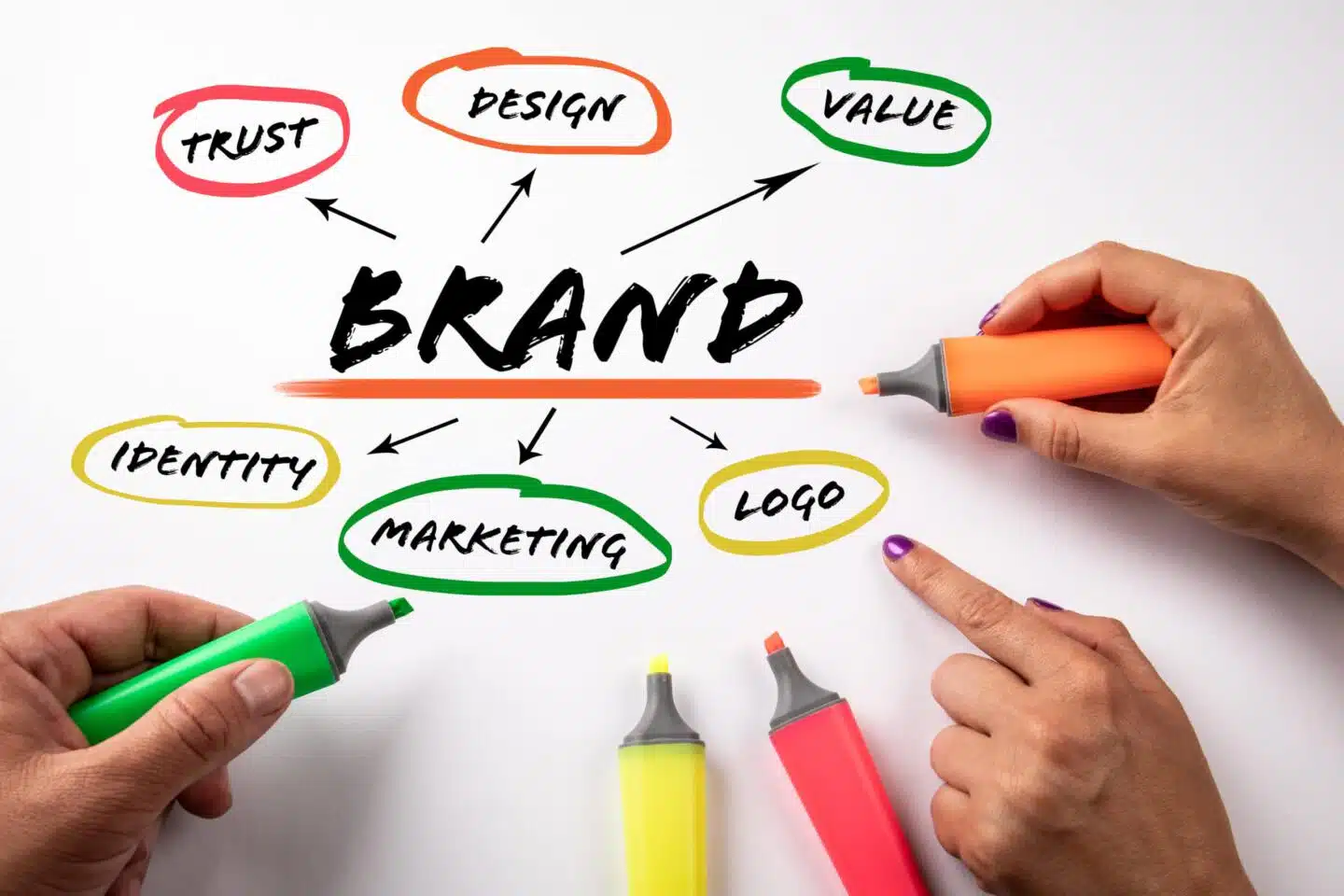
A brand is more than a logo or tagline — it’s a system of perception, meaning, and trust. Yet many organizations still manage brand and data as separate functions. The result? Beautiful stories that aren’t measurable, and strong analytics that don’t inspire emotion.
The 2025 Adobe Experience Integration Index found that brands integrating creative and data teams improved customer engagement by 42% and content efficiency by 33%.
At Webolutions, our Brand Intelligence Framework™ merges these disciplines — pairing messaging strategy with measurable data insights. This ensures every campaign reflects brand purpose while delivering trackable business outcomes.
When brand clarity meets data precision, perception turns into performance.
-
Building a Centralized Marketing Technology Ecosystem
Over the past decade, marketing technology (MarTech) has exploded — with the average enterprise now using more than 90 digital tools. The problem is fragmentation: disconnected systems that create friction, duplicate data, and reduce ROI.
A 2025 Gartner MarTech Consolidation Study revealed that CMOs who reduced tool redundancy and integrated platforms into a single ecosystem cut operational inefficiencies by 37% and improved data accuracy by 41%.
Webolutions partners with organizations to conduct MarTech Ecosystem Audits™, mapping integrations between CRM, CMS, analytics, and automation platforms. We then streamline these systems into one unified infrastructure — enabling faster decisions, lower costs, and continuous scalability.
-
Turning Data Silos into Growth Systems
Data is only powerful when it flows freely. Unfortunately, most organizations operate in silos — with valuable insights trapped in separate systems like sales databases, analytics dashboards, or ad platforms.
The 2025 Deloitte Unified Data Value Study found that companies with centralized, cross-functional data environments achieved 2.9× higher campaign performance predictability and 31% better ROI optimization.
Webolutions helps clients break down these silos through Unified Data Architecture™ — consolidating data sources, automating pipelines, and connecting business intelligence tools to marketing systems. The result: one truth, one direction, one growth engine.
-
Aligning Technology with the Human Experience
Technology drives efficiency, but connection drives loyalty. The most advanced marketing systems fail when they lose sight of the human story behind the metrics.
The 2025 Harvard Business Review Human-Tech Alignment Report found that brands blending automation with emotional resonance achieved 2.4× stronger brand loyalty and 29% higher advocacy scores.
Webolutions ensures that every system — from CRM workflows to personalization engines — reinforces authentic, human-centered communication. Because technology should enable empathy, not replace it.
-
Measuring Integration ROI
Integration isn’t just a technical goal — it’s a business case.
When your brand narrative, analytics, and technology operate in harmony, performance improves exponentially across every metric.
The 2025 Forrester Marketing Integration Impact Study reported that organizations using integrated growth ecosystems realized 3.1× higher ROI and 2.5× faster campaign deployment.
At Webolutions, we quantify this through Integrated ROI Modeling™, connecting technology investments directly to bottom-line performance. Integration, done right, doesn’t just streamline operations — it multiplies impact.
The Future Is Unified
In 2026, marketing success won’t depend on having the biggest tech stack — it will depend on having the most connected system.
When your brand, data, and technology speak the same language, every campaign reinforces clarity, every dollar stretches further, and every customer interaction strengthens loyalty.
At Webolutions, we help CMOs design and operationalize that system — one where creativity and analytics, storytelling and strategy, converge into a single, scalable growth engine.
✅ Verified Source Links (October 2025):
- Adobe Experience Integration Index 2025
- Gartner MarTech Consolidation Study 2025
- Deloitte Unified Data Value Study 2025
- Webolutions Integrated Marketing Systems & Data Strategy
How to Future-Proof Your Marketing Partnerships
Designing Relationships That Scale, Adapt, and Deliver Measurable Growth
In 2026, the value of a marketing partnership will no longer be defined by deliverables — it will be defined by adaptability, alignment, and accountability. The speed of technological and behavioral change now requires partnerships that can evolve as fast as the marketplace itself.
According to the 2025 PwC Marketing Partnership Performance Study, 74% of CMOs say their current agency or vendor relationships will need to “fundamentally evolve” in 2026 to remain effective. Yet fewer than half have built frameworks for long-term collaboration that prioritize agility, transparency, and innovation.
At Webolutions, we’ve learned that future-ready partnerships are not transactional — they are strategic ecosystems. The most successful organizations treat their agencies as extensions of the leadership team, sharing data, goals, and accountability for outcomes rather than tasks.
-
Prioritize Transparency and Shared Metrics
Trust begins with transparency — in reporting, pricing, and performance. Modern partnerships should operate from a shared data dashboard, not separate spreadsheets.
The 2025 LinkedIn B2B Trust Index found that partnerships built on mutual data visibility and shared KPIs generated 41% stronger ROI alignment and 33% longer retention.
At Webolutions, we implement Performance Partnership Frameworks™, giving clients full access to live dashboards that track progress toward joint KPIs in real time. This ensures every decision is rooted in shared truth, not selective reporting.
-
Choose Partners Who Integrate, Not Isolate
In the old model, agencies operated as external vendors — siloed from internal teams and strategy. The new model demands integration over outsourcing.
A 2025 McKinsey Growth Partnership Study found that brands embedding agency teams directly into strategic planning achieved 29% faster campaign velocity and 2.4× higher innovation output.
Webolutions builds Collaborative Integration Models™ that embed cross-functional experts — from SEO to analytics — alongside client teams. The result: faster iteration, clearer communication, and measurable performance momentum.
-
Define Growth Accountability, Not Just Scope
Future-proof partnerships must go beyond “what” is delivered to “what” is achieved. Scope-based contracts reward activity; performance-aligned partnerships reward outcomes.
The 2025 Deloitte Marketing Accountability Framework showed that organizations using outcome-based agency agreements improved ROI predictability by 39%.
At Webolutions, we align deliverables with growth KPIs — such as lead conversion rate, pipeline velocity, and cost-per-acquisition — ensuring both client and agency measure success through shared results.
-
Demand Continuous Learning and Innovation
The marketing landscape shifts monthly — which means your agency must, too.
The 2025 Gartner Agency Innovation Report revealed that CMOs ranking their partners highest for continuous skill development saw 32% higher satisfaction and 27% greater ROI growth year over year.
Webolutions invests in ongoing R&D, AI integration, and performance benchmarking — ensuring our clients always benefit from emerging tools and proven best practices. A true partner doesn’t just execute the strategy; they evolve it.
-
Align Cultural Values and Communication Style
The best partnerships thrive on shared purpose and compatible communication rhythms. A technically proficient agency that doesn’t align with your organization’s culture can still fail to deliver strategic value.
A 2025 Harvard Business Review Collaborative Success Study found that partnerships with strong cultural alignment achieved 2.7× greater project success rates than those chosen purely for technical capability.
At Webolutions, we prioritize cultural compatibility — ensuring alignment in pace, tone, and decision-making approach before project kickoff. Because success isn’t just what’s delivered; it’s how collaboration feels along the way.
The Partnership Model for 2026
The future of marketing partnership is symbiotic: transparent in data, agile in process, and accountable in performance. The best agencies won’t just execute your vision — they’ll enhance it, bringing data intelligence, creative strategy, and scalable systems under one roof.
At Webolutions, we partner with leadership teams to build clarity, confidence, and continuity — ensuring every marketing investment delivers measurable business impact and every collaboration fuels future growth.
✅ Verified Source Links (October 2025):
- PwC Marketing Partnership Performance Study 2025
- LinkedIn B2B Trust Index 2025
- McKinsey Growth Partnership Study 2025
- Deloitte Marketing Accountability Framework 2025
- Gartner Agency Innovation Report 2025
- Webolutions Full-Service Marketing Partnership Model
Conclusion – Clarity, Consistency, and Confidence in 2026
Turning Insight into Action for a High-Performance Year Ahead
As 2026 begins, the marketing landscape is more interconnected, intelligent, and competitive than ever. The pace of change will not slow — but the organizations that succeed won’t be those that chase every new trend. They’ll be those that plan with clarity, execute with precision, and adapt with confidence.
According to the 2025 Gartner Strategic Leadership Outlook, CMOs who embed adaptability, cross-functional alignment, and data-driven systems into their annual strategy report 2.9× higher ROI and 38% greater brand resilience than their peers.
The lesson from 2025 was clear: performance alone is no longer enough. The future belongs to leaders who transform marketing from a series of campaigns into a strategic ecosystem — one that integrates brand, data, and technology into a single, measurable growth engine.
At Webolutions, we help organizations make that transformation real — building marketing frameworks that evolve with your business, scale with your vision, and deliver clarity across every channel and customer interaction.
-
Lead with Clarity
Every marketing decision in 2026 should begin with one question: What business outcome will this achieve?
Clarity means prioritizing impact over activity — investing in the initiatives that directly influence growth, profitability, and customer loyalty.
The 2025 Bain & Company Growth Leadership Report found that companies whose CMOs led with outcome-based clarity achieved 45% higher marketing ROI and 27% faster strategic alignment across teams.
At Webolutions, our Strategic Clarity Framework™ helps marketing leaders define measurable objectives, design data-backed roadmaps, and maintain organizational focus — ensuring that clarity becomes your most powerful growth asset.
-
Commit to Consistency
In a fragmented digital world, consistency is currency.
When messaging, data, and experience align across every channel, customers trust faster and convert more confidently.
A 2025 Deloitte Brand Consistency Analysis revealed that organizations maintaining consistent brand experiences across platforms saw 33% higher customer retention and 29% stronger lifetime value.
Webolutions’ Unified Message Architecture™ ensures that every campaign, touchpoint, and interaction reinforces a single, compelling brand narrative — turning consistency into competitive advantage.
-
Operate with Confidence
The modern CMO doesn’t just react to change — they anticipate it. Confidence comes from visibility, insight, and agility.
The 2025 Forrester Marketing Confidence Barometer found that marketing organizations using predictive analytics and adaptive planning frameworks experienced 2.6× greater confidence in strategic decision-making.
At Webolutions, we empower leaders with Performance Intelligence Systems™ that integrate forecasting, KPI dashboards, and scenario modeling — transforming uncertainty into informed action.
The 2026 Imperative: Build Systems, Not Just Strategies
The marketing organizations that thrive in 2026 will treat their strategy not as a static document, but as a living system — one that learns, adapts, and scales continuously.
At Webolutions, our mission is to make that system possible. We partner with CMOs and executive teams to unify vision, technology, and execution into one high-performing ecosystem that drives measurable, predictable growth.
Because the future of marketing isn’t about keeping up — it’s about leading with clarity, powered by confidence, and sustained through consistency.
Take the Next Step
Start 2026 with a marketing strategy built for growth, not guesswork.
Partner with Webolutions to align your marketing investments with your business goals — and build the systems that will carry your organization confidently into the next era of performance.
📞 Schedule a 2026 Strategy Consultation
📊 Explore Webolutions Strategic Marketing Services
✅ Verified Source Links (October 2025):
- Gartner Strategic Leadership Outlook 2025
- Deloitte Brand Consistency Analysis 2025
- Webolutions Marketing Strategy & Growth Systems
- Webolutions Contact Page

- How to Choose a Custom Web Design Company - March 20, 2026
- Digital Marketing for Denver B2B Companies: Building Pipeline, Not Just Traffic - March 19, 2026
- What Is Included in Professional Web Design Services? - March 18, 2026