

AI tools are playing an increasingly prominent role in the marketing process, providing businesses with a powerful tool to improve the speed, accuracy and scalability of their efforts. But simply incorporating AI technology into your marketing process won’t necessarily deliver improved results. It’s important to understand how to leverage the strengths of AI technology in a way that complements the abilities of your team and empowers them to perform the critical tasks that require human oversight.
The businesses that will be positioned to achieve the best marketing results moving forward are the ones that understand how to balance the productivity capabilities of AI with the human expertise and experience of their team. When you’re able to achieve this symbiotic relationship, it will allow your marketing team to harness their strengths to the best of their ability.
How to Determine the Division of Labor Between Humans and AI Tools
 Before you can set up a complementary AI-human process, it’s important to understand the strengths and limitations of both AI technology and the humans using these tools. The good news is that the inherent strengths of humans and the AI tools they use are quite distinct, allowing them to address different aspects of the marketing process much more seamlessly than if their strengths were duplicative.
Strengths and Limitations of AI Tools
AI tools excel at improving the speed, efficiency and scale of work being performed. You can leverage their strengths by having these tools handle tasks that are repetitive and data heavy. Some of the most effective ways to implement AI technology in your marketing workflow include:
- High-volume data analysis and pattern detection across channels – AI technology can improve the accuracy of your insights and result in faster decisions than is possible when data analysis is performed manually by humans.
- Automation of routine tasks – AI can manage basic tasks such as email sends, ad optimization and report generation that don’t require critical thinking skills.
- Real-time optimization of campaigns – AI can help you maximize your marketing ROI by conducting A/B testing, reallocating budgets and adjusting ad bids as needed based on performance data.
However, AI tools are limited in their ability to understand nuance, generate original ideas and work, or incorporate real-world context into their insights. These weaknesses are seen in a variety of ways:
- Limited creativity and emotional intelligence – When used for content creation, AI tools often generate work that can feel generic, off-brand or tone-deaf if it’s not extensively refined by a human content specialist.
- Dependence on data quality and training – If AI tools are given biased, incomplete or outdated data, it can result in inaccurate predictions and misleading insights.
- Lack of human connection and ethical judgment – When used without proper oversight, AI tools can potentially erode consumer trust or create problems concerning privacy matters.
Strengths and Limitations of Human Marketers
 Humans possess far superior judgment, creativity and relationship building abilities compared with AI. You can leverage these strengths by having your team focus on the tasks that require a more sophisticated understanding of context and nuance. Humans are significantly better than AI tools at owning the aspects of the marketing process associated with:
- Strategic thinking and judgment – Your team is better equipped to make decisions that are heavily impacted by your business goals, brand values and local market nuances.
- Creativity, storytelling and brand building – Humans can craft narratives that feel much more unique and compelling, and they’re better than AI tools at creating content that resonates with your audience on an emotional level.
- Relationship building – Humans have much greater emotional intelligence than AI, and they are much better at cultivating the long-term relationships with your audience that is necessary to build brand loyalty.
However, human marketers are more limited in their ability to handle tasks where volume, speed or consistency are required at large scale:
- They have limited capacity for large-scale data processing and continuous testing, making it harder for them to identify subtle patterns or changes in performance.
- They’re more susceptible to bias or inconsistency during the data analysis process, which can negatively impact the accuracy of your results.
How Successful Companies Are Balancing AI Productivity and Human Expertise
The companies that have most successfully navigated this new paradigm typically let AI handle high-volume, rules-based and low-risk tasks with human oversight, while keeping their team members in charge of strategic, emotional or high-stakes tasks using AI support improve their efficiency and overall results. When making the decisions regarding AI-human collaboration, it can be helpful to break tasks into the following categories:
- Tasks supported by AI – High-level, strategic decision-making tasks should be handled by humans who use AI-generated data and insights to help them analyze and make decisions.
- Tasks elevated by AI – For tactical tasks that benefit from a human touch, have AI analyze and suggest options which are then reviewed by your team members to make the final decision on which option to use.
- Tasks automated by AI – Routine, low-risk tasks can generally be handled by AI without human supervision.
Steps to Take to Implement a Collaborative AI-Human Workflow
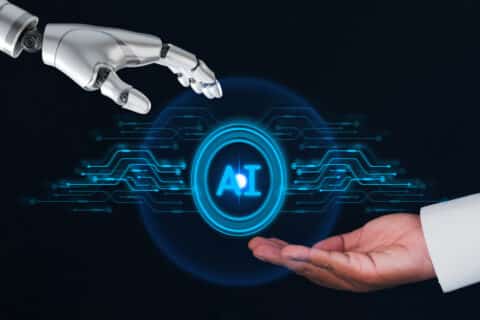 Building an effective AI-human collaborative workflow requires a great deal of thought and intention. The following steps will help you get this process right.
Clarify Goals and Roles
Work with your leadership team to set two or three concrete goals associated with what you want to accomplish by integrating AI into your workflow. This will help clarify the areas of your operations where AI will provide the greatest impact.
You should also define the specific roles that will be handled by AI vs. by your team. The specific tasks you have AI own will depend on the goals you outline, but some of the most common to delegate include:
- Data crunching
- Audience insights
- Segmentation suggestions
- Early stages of content development (topic generation, content outlines and in some instances, initial drafts)
- A/B testing setups
- Email send time scheduling and optimization
Tasks that are critical to have your team handle include:
- Brand positioning
- Offer strategy
- Creative direction
- Final drafts of content
- Decisions requiring ethical considerations, nuance or judgment
Map AI into Your Existing Workflow
Document your existing workflow so that you can evaluate the best way to integrate AI into the processes you’ve already established. For all tasks, outline the steps from idea through implementation through measurement, and separate the steps into two categories:
- Repetitive or data-heavy (can be handled by AI)
- Strategic or relationship-heavy (require human expertise)
Establish Guardrails and Human Checkpoints
A successful AI-human workflow requires guardrails to ensure your AI tools stay on-brand and sound human when assisting with tasks that require content. There should be two tiers of guardrails:
- Brand rules – Create a style guide that outlines your brand’s voice, tone and phrases to use/avoid. Make sure AI tools reference these rules whenever they provide work related to conveying your brand messaging.
- Human checkpoints – Require human review of any public-facing work that affects your brand, pricing or legal compliance. In particular, always have a human own the final decision on content/messaging, budget changes and overarching strategy recommendations.
Create Standards, AI Prompts and Human Review Rules
Establish standards for the quality you expect from AI-generated work. Then, build a prompt library for each task being performed by AI to ensure this work consistently meets your quality standards and is tied to your brand guidelines. Finally, define the rules that will guide what your team is expected to check when reviewing AI work, as well as the conditions that will trigger the need for this work to be heavily edited or rejected and redone.
Train Your Team
It’s important to provide your team with the proper training necessary to optimize their collaboration with your AI tools. This training should include:
- A review of each AI tool, including the best usage applications and how to use them
- Prompt best practices to ensure the best quality AI output
- AI usage best practices
- Clear expectations for how AI will be incorporated into each team member’s workflow
Webolutions’ AI-Powered Marketing Process Will Elevate Your Results
As we navigate this new AI-driven landscape, the businesses that will achieve the best marketing results will be the ones that most deftly balance the productivity and efficiency gains provided by AI with expertise possessed by their team members. But this AI-human collaboration isn’t just important for your internal marketing team; if you work with a digital marketing agency, it’s also critical to choose one that is leveraging AI to maximize the impact of your marketing efforts.
At Webolutions, we’ve been closely monitoring the advances in AI technology since it began changing the marketing landscape a few years ago, and we’ve developed a meticulous AI-driven process that delivers superior results for our clients. Our collaborative AI-human approach to digital marketing has improved our data-driven recommendations, ensuring your digital marketing strategy delivers maximum impact. In addition, our use of AI gives us the ability to scale your campaigns as your business grows over time, while maintaining the high quality standards our company has become known for over the last 30 years.
Contact us today to schedule a free consultation.

- 7 Reasons Why Your Brand Doesn’t Stand Out - March 2, 2026
- Marketing Insights Learned from the 2026 Super Bowl Commercials - February 9, 2026
- Balancing AI Productivity with Human Expertise to Elevate Your Marketing - January 19, 2026